

Parents often hear terms such as overbite, deep bite, and deep overbite during dental or orthodontic appointments and may wonder whether they all describe the same problem. The confusion is understandable because the terms are closely related, but they do not always mean exactly the same thing.
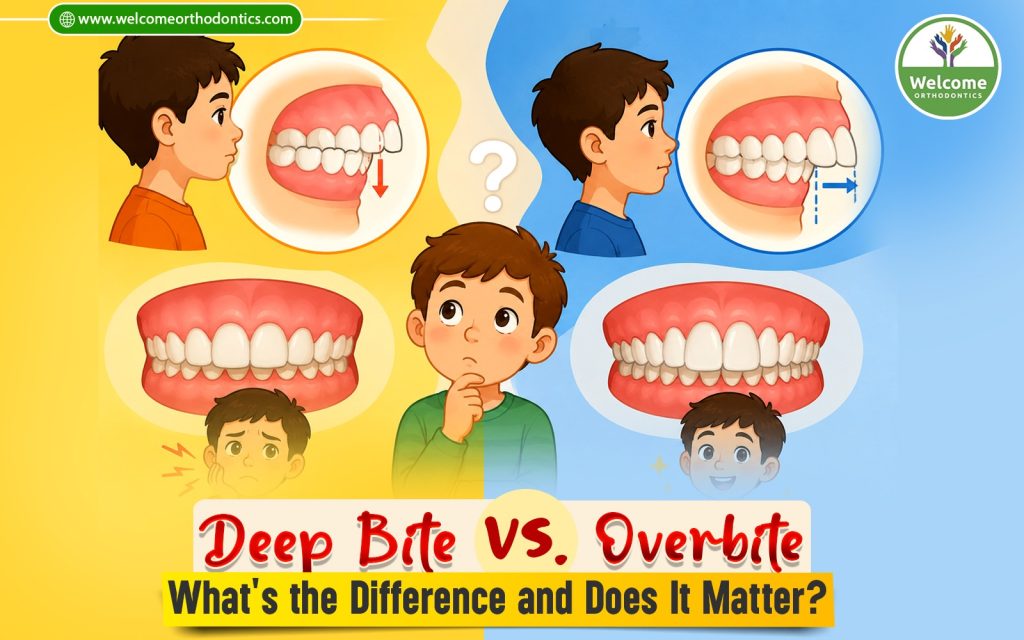
An overbite refers to the vertical overlap of the upper front teeth over the lower front teeth. Some degree of overlap is normal and helps the front teeth function properly. A deep bite, also called a deep overbite, occurs when that overlap is excessive.
The distinction matters because an ordinary overbite may require no treatment at all, while a significantly deep bite can sometimes contribute to tooth wear, gum irritation, damage to the roof of the mouth, or difficulties with normal bite function. Understanding the difference can help parents recognize when a child’s bite is simply part of normal development and when an orthodontic evaluation may be worthwhile.
What Is an Overbite?
An overbite describes how much the upper front teeth vertically overlap the lower front teeth when the back teeth are together. A certain amount of vertical overlap is a normal part of a healthy bite. The upper incisors typically cover part of the lower incisors rather than meeting edge-to-edge. The term overbite therefore does not automatically mean there is an orthodontic problem.
Understanding Normal Vertical Tooth Overlap
The upper and lower front teeth have several important functions. They help bite into food, guide certain jaw movements, and contribute to the overall stability of the bite. A normal amount of vertical overlap allows the upper incisors to sit slightly over the lower incisors without placing excessive pressure on the teeth or surrounding tissues.
The amount of overlap can vary between individuals. What matters clinically is whether the relationship is appropriate for that person’s teeth, jaws, facial development, and overall bite function.
When an Overbite Becomes Excessive
An overbite becomes a concern when the upper front teeth cover an excessive portion of the lower front teeth.
This is generally referred to as a deep bite or deep overbite. The American Association of Orthodontists describes a deep bite as excessive vertical overlap of the upper front teeth over the lower front teeth.Deep Bite vs. Overbite: The Actual Difference
The terms overbite and deep bite are often used interchangeably in orthodontics, particularly when describing excessive vertical overlap of the front teeth. The American Association of Orthodontists (AAO) defines a deep bite as an excessive overbite, where the upper front teeth significantly cover the lower front teeth vertically. (American Association of Orthodontists)
So, is there actually a difference?
The simplest way to understand it is:
An overbite describes the vertical overlap. A deep bite describes an overbite that is excessive enough to be considered a bite problem.
A certain amount of overbite is normal and helps the front teeth perform their functions. It becomes clinically important when the overlap is excessive or begins affecting the teeth, gums, palate, chewing, or overall bite.
This distinction matters because seeing some overlap between the upper and lower front teeth does not automatically mean a child or adult needs orthodontic treatment.
What Does a Deep Bite Look Like?
A deep bite can look different depending on its severity and the position of the teeth. In a mild case, the upper incisors may cover more of the lower teeth than expected without causing noticeable symptoms. In a more pronounced case, very little of the lower front teeth may be visible when the patient bites down.
Parents may notice:
- Upper front teeth covering most of the lower front teeth
- Lower front teeth appearing unusually short or hidden
- Lower teeth contacting the gums behind the upper teeth
- A noticeable vertical overlap when the mouth is closed
- Excessive wear along the edges of the front teeth
However, appearance alone cannot determine whether an overbite is problematic. An orthodontist also evaluates how the teeth contact and whether the excessive overlap is causing damage or interfering with normal function.
What Causes a Deep Bite?
Deep bites can develop for several reasons, and more than one factor may contribute to the same patient’s bite.
Genetics and Jaw Growth
The size and shape of the upper and lower jaws can influence how deeply the front teeth overlap. Inherited differences in jaw development, tooth size, and facial structure may contribute to a deep bite. Growth patterns can also influence how the relationship changes during childhood and adolescence.
Tooth Position and Eruption
The position in which individual teeth erupt can affect the depth of the bite. If certain front teeth erupt farther than expected or the back teeth do not develop a balanced relationship, the vertical overlap may increase. This is why orthodontists evaluate the entire dental arch rather than looking only at the front teeth.
Crowding and Arch Development
Crowding can occur alongside a deep bite. When there is insufficient space for teeth to align properly, individual teeth may rotate or become positioned differently within the dental arch. These changes can affect how the upper and lower teeth meet.
Early Loss of Baby Teeth
The premature loss of primary teeth can sometimes influence the developing permanent dentition and contribute to changes in bite relationships. The effect depends on which teeth are lost, when they are lost, and how the surrounding teeth develop afterward.
Teeth Grinding and Clenching
Grinding or clenching does not necessarily cause a deep bite, but it can make some of its effects more significant. Repeated forces may accelerate tooth wear, potentially changing the way the front teeth contact one another over time. The AAO notes that grinding can intensify tooth wear associated with deep bites.
Does a Deep Bite Affect Oral Health?
It can. The significance of a deep bite depends on its severity and whether the excessive overlap is causing trauma or abnormal forces.
Excessive Tooth Wear
When the upper and lower front teeth overlap too deeply, they may experience greater contact during normal biting. Over time, this can contribute to enamel wear. Grinding or clenching may increase the amount of wear. Significant enamel loss can eventually lead to sensitivity and other restorative concerns.
Gum Irritation
A deep bite can sometimes cause the lower front teeth to contact the gum tissue behind the upper teeth. Repeated contact may irritate the gums and, in some cases, contribute to recession or other periodontal concerns.
Damage to the Roof of the Mouth
In a particularly deep bite, the lower front teeth may extend far enough upward to contact the palate. Repeated contact can create irritation or painful sores, particularly when the bite is severe.
Chipping and Sensitivity
Excessive contact and wear can make front teeth more vulnerable to chipping or sensitivity. This does not mean every person with a deep bite will develop tooth damage. The risk depends on the individual bite, tooth structure, habits, and severity.
Changes in Chewing Function
A deep bite can also influence how the upper and lower teeth come together during chewing. If the overlap interferes with normal tooth contact, chewing may become less efficient or other teeth may compensate. The goal of orthodontic treatment is therefore not simply to make the front teeth look less overlapping. A healthy bite should allow the teeth to function together effectively.
Can a Deep Bite Get Worse Over Time?
It can, although progression varies between individuals. For children, ongoing jaw growth and permanent tooth eruption can change the bite relationship. For adults, tooth wear, grinding, or changes in tooth position may influence how an existing deep bite behaves. The AAO notes that deep bites typically do not correct themselves and may worsen when left untreated.
This does not mean every child with an increased overbite needs immediate treatment. Instead, an orthodontist can determine whether the bite should be treated, monitored, or reassessed as growth continues.
How Is a Deep Bite Diagnosed?
Diagnosis involves more than simply looking at how much of the lower front teeth are covered.
An orthodontist may evaluate:
- The vertical overlap of the front teeth
- How the upper and lower teeth contact
- Tooth position and alignment
- Jaw relationships
- Tooth wear
- Gum or palatal contact
- Facial growth and development in children
Digital X-rays and other imaging may be used when necessary to understand the relationship between the teeth and jaws. For growing children, monitoring development can be particularly useful because the bite may change as permanent teeth erupt and the jaws mature.
Treatment Options for a Deep Bite
Treatment depends on the patient’s age, severity, tooth position, jaw relationships, and underlying cause.
Braces
Traditional braces are commonly used to correct deep bites. Brackets and wires gradually move teeth into more appropriate positions while helping establish a healthier relationship between the upper and lower arches. Additional orthodontic components may sometimes be used depending on the bite.
Clear Aligners
Clear aligners may be appropriate for some patients with deep bites. They use a series of custom-made trays to gradually move teeth and modify the bite. However, not every deep bite is suitable for aligner treatment, particularly when the case involves more complex tooth or skeletal relationships. An orthodontist must determine whether aligners can provide the required tooth movement.
Bite-Correcting Appliances
Some patients may benefit from additional orthodontic appliances designed to help modify the bite. The specific appliance depends on what is causing the deep bite and whether the patient is still growing.
Treatment During Childhood
For children, treatment timing can be especially important. Because the jaws are still developing, orthodontists can consider the child’s growth pattern when planning treatment. In some cases, monitoring may be recommended first. In others, addressing the bite during growth may provide advantages.
The AAO recommends orthodontic evaluation around age 7, allowing developing bite problems to be identified and monitored at an appropriate stage.
Treatment for Adults
Adults can also receive treatment for deep bites.vBecause facial growth is complete, treatment focuses on modifying the existing tooth and jaw relationships rather than guiding future growth. Braces or clear aligners may be appropriate depending on the individual case. In particularly severe skeletal cases, orthognathic surgery may sometimes be considered.
When Should You See an Orthodontist About an Overbite?
Consider an orthodontic evaluation if you notice:
- Upper front teeth covering most of the lower teeth
- Lower teeth contacting the gums behind the upper teeth
- Lower teeth touching the roof of the mouth
- Significant tooth wear
- Frequent chipping or sensitivity
- Difficulty biting or chewing
- A noticeable change in your child’s bite
An evaluation can determine whether the overbite is within a normal range or represents a deep bite that warrants monitoring or treatment.
How Welcome Orthodontics Helps Patients With Deep Bites
At Welcome Orthodontics, Dr. Mark Tavakoli takes a comprehensive approach to evaluating deep bites. Rather than focusing only on how much the upper teeth overlap the lower teeth, the assessment considers tooth position, bite function, jaw relationships, facial development, and the overall health of the teeth and surrounding tissues.
With more than 30 years of clinical experience, Dr. Tavakoli uses advanced orthodontic technology for digital scans, X-rays, and treatment planning. This allows the team to identify whether an excessive overbite is primarily related to tooth position, jaw development, or a combination of factors.
Treatment recommendations are individualized for every patient. Some people may benefit from active orthodontic treatment, while others may simply need monitoring. The goal is to address genuine orthodontic needs while avoiding unnecessary procedures.
Conclusion
The terms overbite and deep bite are closely connected, but understanding their distinction is useful. An overbite describes the vertical overlap between the upper and lower front teeth, and some amount of overlap is completely normal. A deep bite refers to an excessive overbite that may interfere with normal function or cause problems such as tooth wear, gum irritation, or contact with the palate.
Not every visible overbite requires treatment. What matters is how the teeth and jaws function, whether the overlap is excessive, and whether it is creating current or potential problems. For children, early evaluation can be particularly valuable because orthodontists can monitor how the bite changes as the jaws grow and permanent teeth erupt. For adults, treatment remains possible, with the approach determined by the severity and underlying cause.
Ultimately, the best way to determine whether an overbite is simply a normal feature or a deep bite requiring attention is through a comprehensive orthodontic evaluation. A deep bite can vary in severity. In more pronounced cases, the lower front teeth may contact the gum tissue behind the upper teeth or the roof of the mouth.
The clinical significance depends on the amount of overlap and whether it is causing damage, discomfort, functional problems, or other orthodontic concerns.
0 comments on “Deep Bite vs. Overbite: What’s the Difference and Does It Matter?”