

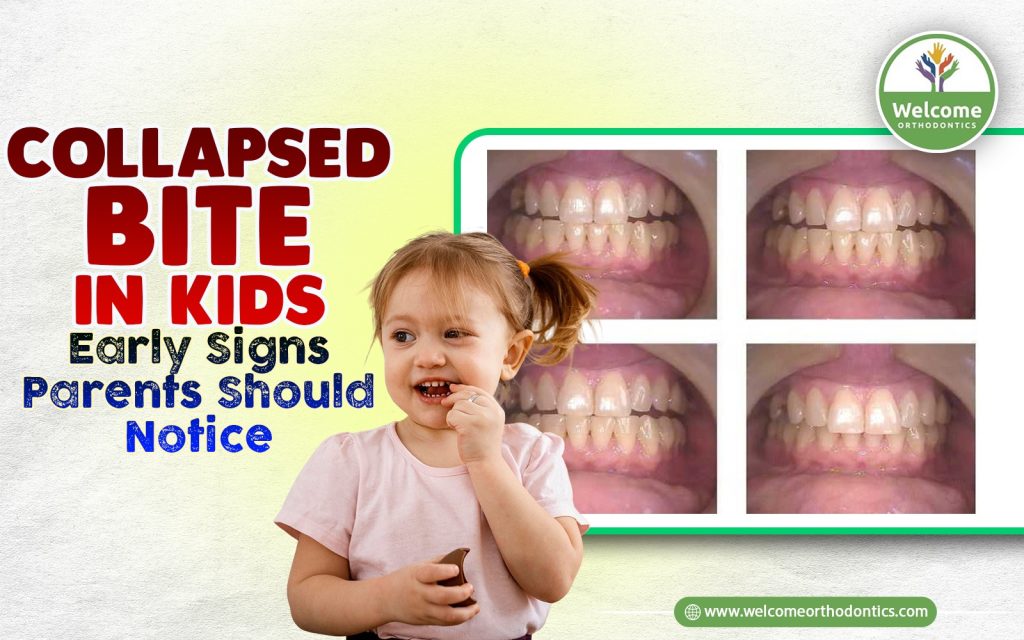
Parents often watch their children’s smiles change with curiosity and excitement. As baby teeth fall out and permanent teeth emerge, the appearance of the smile evolves quickly. While small irregularities are normal during this stage, some bite problems can begin developing quietly during childhood. One such condition is a collapsed bite, a structural issue that can affect how the teeth meet, how the jaws function, and how the face develops over time.
A collapsed bite refers to a situation where the vertical height of the bite decreases because the teeth are not supporting the jaw properly. In children, this can happen when certain teeth wear down, erupt incorrectly, or fail to maintain the normal spacing and balance needed to support the bite. Because children’s teeth and jaws are still developing, the condition may begin gradually and may not cause immediate discomfort.
The challenge is that a collapsed bite often develops subtly. Parents may notice small changes, such as difficulty chewing, uneven tooth wear, or a child closing their mouth differently, but may not immediately realize these changes are related to bite development. Over time, however, these early signs can influence jaw growth, tooth alignment, and even facial balance.
Recognizing the early warning signs of a developing collapsed bite can make a significant difference. With early orthodontic evaluation and proper guidance, many bite issues can be addressed while a child’s mouth is still growing, often preventing more complex treatment later.
This article explores what a collapsed bite is, why it can develop during childhood, how it affects oral health and facial development, the signs parents should watch for, and how early orthodontic care can help restore balance and support healthy growth.
Understanding What a Collapsed Bite Is in Children
A collapsed bite occurs when the vertical dimension between the upper and lower jaws decreases due to changes in tooth structure or bite alignment. In simpler terms, the teeth no longer provide the proper support that keeps the jaws positioned at their normal height.
In a healthy bite, the upper and lower teeth meet in a way that distributes chewing pressure evenly across the dental arches. The molars and premolars act as the main support structures that maintain the proper distance between the jaws. When that support is compromised, the jaws may move closer together than they should. This change in jaw position is what orthodontists refer to as a collapsed bite.
In children, a collapsed bite may develop differently than it does in adults. Instead of being caused primarily by long-term tooth wear, it may arise from developmental factors such as uneven tooth eruption, premature loss of teeth, or bite discrepancies.
Several characteristics may indicate a developing collapsed bite in a child:
- The lower face may appear slightly shorter when the child closes their mouth
- The front teeth may overlap excessively
- Chewing may become uneven or uncomfortable
- Certain teeth may show unusual wear patterns
Because the jaws are still developing during childhood, these changes can influence the direction of facial growth. This makes early awareness especially important. Another reason collapsed bites can be difficult to detect is that children often adapt to bite imbalances without complaining. They may chew differently, shift their jaw while biting, or avoid certain foods.
Understanding how a collapsed bite develops helps parents recognize that subtle changes in chewing or tooth alignment may signal deeper structural changes in the bite.
Common Causes of a Collapsed Bite During Development
Collapsed bites in children rarely occur because of a single factor. Instead, they usually develop from a combination of structural, developmental, and functional influences.
Early Tooth Wear or Enamel Damage
Although significant tooth wear is more common in adults, some children experience early enamel wear due to grinding, clenching, or other habits. When the chewing surfaces of teeth wear down, the vertical support they provide decreases. As the teeth lose height, the jaws may gradually move closer together, contributing to a collapsed bite.
Premature Loss of Teeth
Baby teeth play an essential role in maintaining space and guiding the eruption of permanent teeth. When these teeth are lost too early due to decay, trauma, or extraction, neighboring teeth may shift into the empty space. This shifting can disrupt the balance of the bite and alter how the upper and lower teeth meet.
Uneven Tooth Eruption
Permanent teeth erupt in a carefully coordinated sequence. When this process is disrupted, such as when certain teeth erupt earlier or later than expected—the bite relationship may become uneven. This uneven eruption can create imbalances that contribute to bite collapse.
Jaw Growth Imbalances
The upper and lower jaws do not always grow at the same pace. If one jaw develops differently than the other, the bite relationship may change. These discrepancies may cause excessive overlap of the front teeth or improper contact between the back teeth.
Oral Habits and Muscle Patterns
Certain oral habits can influence bite development over time. Examples include:
- Teeth grinding
- Prolonged thumb sucking
- Tongue thrusting
- Chronic mouth breathing
These habits can alter the pressure patterns within the mouth and gradually influence how the teeth and jaws align.
How a Collapsed Bite Affects Facial Growth and Oral Health
A developing collapsed bite can affect more than just tooth alignment. Because the teeth and jaws play a key role in facial structure and oral function, changes in the bite can influence several aspects of development.
Changes in Chewing Function
One of the first areas affected by a collapsed bite is chewing efficiency. When the teeth do not meet properly, the jaw muscles must work harder to break down food. Children may respond by chewing primarily on one side of the mouth or avoiding foods that require strong chewing.
Jaw Joint Stress
The temporomandibular joints (TMJ) allow the jaw to move smoothly during speaking and chewing. When the bite is imbalanced, these joints may experience uneven pressure. Over time, this stress can contribute to jaw discomfort or fatigue.
Facial Proportion Changes
The vertical dimension of the bite helps determine how the lower face appears. When the bite collapses, the distance between the nose and chin may appear slightly shorter. Although these changes may be subtle in children, they can influence facial growth patterns over time.
Tooth Alignment Issues
A collapsed bite can also contribute to crowding, excessive overlap of the front teeth, or shifting of the dental arches. These alignment issues may become more noticeable as permanent teeth continue erupting.
Long-Term Oral Health Risks
If left untreated, a collapsed bite may increase the risk of uneven tooth wear, jaw strain, and complex orthodontic problems later in life. Early recognition allows orthodontists to guide development before these problems become more difficult to correct.
Early Signs Parents Should Watch For
Parents are often the first to notice subtle changes in their child’s smile or chewing habits. Recognizing these early clues can help identify a developing collapsed bite before it becomes more serious.
Difficulty Chewing Certain Foods
Children may begin avoiding foods that require strong chewing, such as crunchy vegetables or tougher meats. They may chew slowly or rely heavily on one side of the mouth.
Excessive Overlap of Front Teeth
An unusually deep overlap of the front teeth may indicate that the bite height has decreased.
Teeth Grinding
Some children grind their teeth, particularly during sleep. Grinding can gradually wear down the chewing surfaces of teeth and contribute to bite collapse.
Changes in Jaw Movement
Parents may notice that their child shifts their jaw while biting or chewing to find a comfortable position.
Uneven Tooth Wear
Dentists may observe unusual wear patterns on certain teeth during routine checkups.
Complaints of Jaw Fatigue
Although children may not describe pain clearly, they may mention that their jaw feels tired after eating.
When these signs appear consistently, orthodontic evaluation can help determine whether the bite is developing normally.
How Orthodontic Evaluation and Early Treatment Can Help
When a collapsed bite begins developing in childhood, early orthodontic evaluation can make a significant difference. Because a child’s teeth and jaws are still growing, orthodontists have a unique opportunity to guide development rather than simply correct problems later. Early assessments allow specialists to identify bite imbalances, tooth wear patterns, and jaw growth concerns before they progress into more complex issues.
During an orthodontic evaluation, the orthodontist examines how the upper and lower teeth meet, how the jaw moves during chewing, and whether there are signs of excessive pressure on certain teeth. Digital scans and imaging may also be used to analyze tooth position and jaw structure in greater detail. This information helps determine whether a child’s bite is developing normally or whether early intervention may help restore balance.
For many children, treatment does not necessarily involve braces immediately. Early orthodontic care often focuses on monitoring growth, guiding jaw development, and addressing habits that contribute to bite collapse. By intervening at the right time, orthodontists can support healthier tooth alignment and jaw function while minimizing the need for more extensive treatment later.
At Welcome Orthodontics, this proactive and thoughtful approach is central to patient care. The practice is dedicated to helping children and families achieve healthy, confident smiles in an environment designed to be welcoming and comfortable. Every visit is focused not only on clinical excellence but also on making patients feel relaxed and supported throughout their orthodontic journey.
To ensure precise diagnosis and effective treatment planning, the team uses advanced orthodontic technology for scans, X-rays, and treatment evaluation. These tools allow the orthodontist to analyze bite relationships and jaw growth with exceptional accuracy, creating treatment plans tailored to each child’s needs.
A defining aspect of the Welcome Orthodontics philosophy is a conservative approach to treatment. Parents can feel confident knowing that only the procedures necessary to achieve healthy, stable results will be recommended. This patient-first mindset helps ensure that treatment decisions are guided by long-term oral health rather than unnecessary interventions.
Communication is another important part of the experience. During the very first appointment, the orthodontic team takes time to explain every aspect of the evaluation and treatment plan clearly. Parents are encouraged to ask questions and fully understand their child’s options before moving forward.
Experience also plays a major role in delivering excellent care. With more than 30 years of clinical experience, Dr. Tavakoli brings extensive orthodontic knowledge and expertise to every case. Whether a child is experiencing early bite imbalance, tooth crowding, or developmental concerns, the team has the experience needed to guide treatment effectively.
Orthodontic care is also a significant investment for families. Recognizing this, Welcome Orthodontics works closely with patients to make treatment accessible. Flexible financing plans and assistance with maximizing insurance benefits help families receive the care they need without unnecessary financial stress.
Most importantly, every treatment plan is customized. No two smiles develop the same way, and the orthodontic team carefully designs each plan to match the child’s unique dental structure, growth pattern, and family goals.
For parents who notice early signs of a collapsed bite, seeking professional evaluation can provide reassurance and clarity. With expert guidance, advanced technology, and a patient-centered approach, Welcome Orthodontics helps families address bite concerns early and guide children toward healthier, more confident smiles.
Conclusion
A collapsed bite in children can develop gradually, often without obvious symptoms in the early stages. Because the teeth and jaws are still growing, small imbalances in tooth wear, eruption patterns, or jaw development can influence how the bite forms over time.
Recognizing early warning signs, such as uneven chewing, excessive tooth overlap, or jaw shifting, allows parents to seek professional guidance before these changes lead to more significant orthodontic concerns.
Early orthodontic evaluation provides valuable insight into how a child’s smile is developing. By identifying bite discrepancies early, orthodontists can guide jaw growth and tooth alignment in ways that support healthy oral function and facial development.
With experienced care and personalized treatment planning from practices like Welcome Orthodontics, families can address bite issues proactively and ensure that children grow with balanced bites, strong jaw function, and confident smiles that last into adulthood.
0 comments on “Collapsed Bite in Kids: Early Signs Parents Should Notice”