

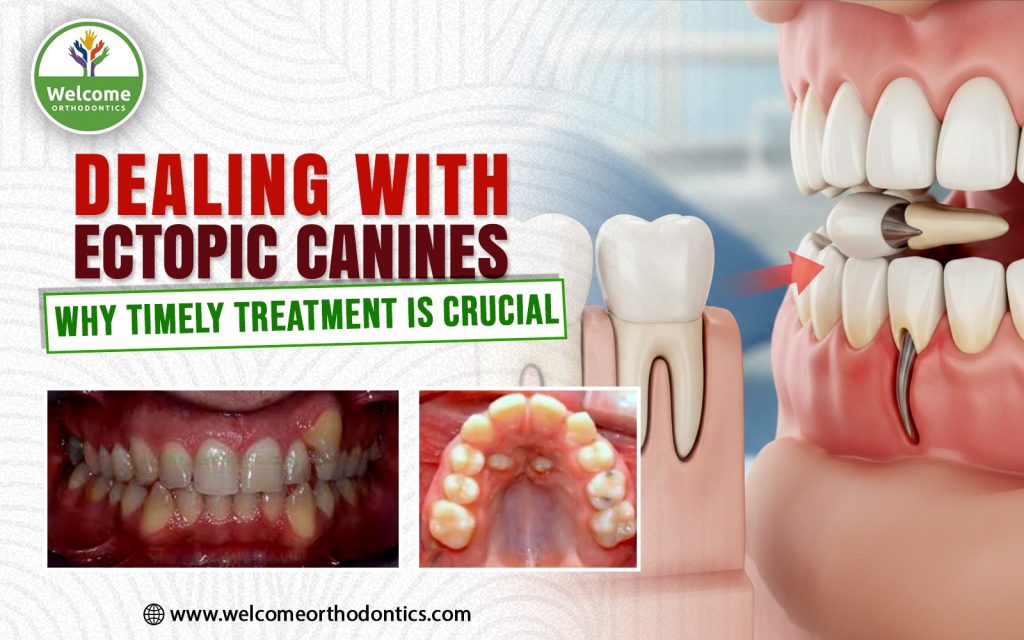
For many parents, orthodontic concerns begin when teeth start to look crowded, crooked, or uneven as their child grows. While these visible changes often prompt the first orthodontic consultation, one of the most important, and frequently overlooked, developmental issues in kids and teens is ectopic canines. Canines, also known as cuspids, are cornerstones of the smile. They guide the bite during chewing, support facial balance, and contribute significantly to long-term dental stability. Because they erupt later than most front teeth, problems with their eruption often go unnoticed until complications begin to surface.
When canines erupt in the wrong position, or fail to erupt at all, the effects can extend far beyond appearance. Ectopic canines can disrupt alignment, damage neighboring teeth, alter bite function, and increase the complexity of future orthodontic treatment. They are most commonly identified during the mixed dentition years and early adolescence, a critical window when jaw growth and tooth eruption are still actively developing. The encouraging news is that early identification often allows orthodontists to guide these teeth into place with simpler, less invasive treatment. When diagnosis is delayed, however, intervention may require surgery and prolonged orthodontic care. This article explains what ectopic canines are, why they matter, how to recognize early warning signs, and why timely orthodontic intervention is especially important for growing kids and teens.
What Are Ectopic Canines?
An ectopic canine is a canine tooth that deviates from its normal eruption path as it develops beneath the gums. Under typical circumstances, canine teeth emerge gradually into their designated positions at the corners of the dental arch, helping shape the smile and guide proper bite function. However, when a canine becomes ectopic, it does not follow this natural route. Instead, the tooth may erupt too high on the gums, drift toward the palate (the roof of the mouth), push outward toward the cheek, or grow at an angle that interferes with neighboring teeth. In some cases, the canine may fail to erupt altogether and remain completely trapped beneath the gums and bone, a condition known as impaction.
This abnormal eruption pattern is not simply a cosmetic issue. Because canines have long roots and play a key role in stabilizing the bite, their position is critical to overall dental health. When they erupt incorrectly, they can block other teeth from coming in properly, cause crowding, or place pressure on the roots of adjacent teeth. Upper canines are far more commonly affected than lower canines due to their longer and more complex eruption path. In fact, after wisdom teeth, upper canines are the second most commonly impacted teeth in the mouth. Their late eruption timeline and reliance on surrounding teeth for guidance make them particularly vulnerable to displacement during childhood and early adolescence.
How Common Are Ectopic Canines in Kids and Teens?
Ectopic canines are more common in children and teenagers than many parents realize, making them an important developmental concern during the growing years. Studies estimate that ectopic eruption of upper canines occurs in approximately 2–5% of the population, placing it among the most frequent eruption problems seen in pediatric and adolescent dentistry. Because canines play such a critical role in bite function and smile balance, even a relatively small percentage translates into a significant number of children who may require orthodontic attention.
Certain groups of children are more likely to experience ectopic canines. Girls tend to be affected more often than boys, possibly due to differences in jaw growth patterns and eruption timing. Children with narrow upper jaws are also at higher risk, as limited space can force developing canines off their normal eruption path. A family history of impacted or ectopic teeth further increases the likelihood, highlighting the strong genetic component involved. Additionally, kids with missing, undersized, or abnormally shaped lateral incisors may lack the natural guidance needed for proper canine eruption.
Because canines erupt relatively late, typically between the ages of 11 and 13, their eruption path is heavily influenced by earlier dental and skeletal development. Subtle issues present years earlier can quietly alter their trajectory. This delayed eruption timeline makes early orthodontic monitoring essential, allowing potential problems to be identified and addressed before they become more complex.
Why Do Canines Become Ectopic?
Ectopic canines rarely have a single cause. Instead, they result from a combination of anatomical, genetic, and developmental factors.
Lack of Space
Crowded or narrow upper jaws restrict eruption space, forcing canines to deviate from normal paths. Early space management can often prevent this displacement before it becomes severe.
Delayed or Absent Guidance Teeth
Missing or undersized lateral incisors fail to guide eruption, allowing canines to drift unpredictably later. This lack of guidance is one of the most common contributors to palatally displaced canines.
Genetic Predisposition
Inherited dental traits increase likelihood of impacted canines, crowding, or missing teeth during development stages. Children with family histories should receive early orthodontic evaluations as a preventive measure.
Prolonged Retention of Baby Canines
Retained primary canines block eruption paths, redirecting permanent canines into abnormal positions within the jaw. Timely removal of baby teeth can often encourage proper eruption naturally.
Abnormal Tooth Angulation
Improper angulation during development directs canines toward palate or cheek instead of arch position normally. This abnormal angulation is often detectable on early orthodontic X-rays.
Narrow Palate or Skeletal Imbalance
Skeletal jaw discrepancies alter eruption trajectories, increasing displacement risk during critical growth periods in childhood. Orthopedic orthodontic treatments can help correct these imbalances while growth is still active.
Early Warning Signs Parents Can Spot
Ectopic canines often develop silently. Still, there are early clues parents and caregivers can watch for:
- Baby canines still present after age 11
Primary canines remaining too long may block proper eruption of permanent canines. - One canine erupting while the other is delayed
Uneven eruption timing can signal an abnormal eruption path on one side. - Bulges on the palate or high gum areas
Visible or palpable bulges may indicate a canine developing in the wrong position. - Gaps or crowding near the front teeth
Unexpected spacing or crowding can suggest canines are drifting off course. - Asymmetry in eruption patterns
Differences between left and right sides often indicate underlying eruption problems. - Complaints of pressure in the upper jaw
Children may feel pressure as displaced canines push against surrounding bone.
Orthodontic evaluations around age 7 are recommended precisely to detect these risks early.
What Happens If Ectopic Canines Are Left Untreated?
Delaying treatment can lead to a cascade of complications:
- Impaction
Untreated ectopic canines may remain trapped in bone, often necessitating surgical exposure and orthodontic traction. - Damage to Adjacent Teeth
Displaced canines can exert pressure on adjacent roots, leading to resorption, instability, and tooth loss. - Severe Crowding
As canines seek space, they displace neighboring teeth, worsening crowding and complicating overall alignment patterns. - Prolonged Orthodontic Treatment
Delayed diagnosis often results in longer treatment timelines, increased appliance use, and more frequent adjustments. - Aesthetic Concerns
Missing or mispositioned canines disrupt smile symmetry, facial balance, and overall aesthetic harmony during adolescence. - Functional Bite Issues
Poor canine guidance increases stress on back teeth, contributing to uneven wear and jaw strain.
The Power of Early Orthodontic Intervention
The single most important factor in managing ectopic canines successfully is timing. Early intervention can:
- Redirect eruption naturally
Early guidance helps permanent canines follow correct paths using natural growth and available space conditions. - Reduce the need for surgery
Timely intervention often prevents impaction, eliminating surgical exposure and reducing overall treatment complexity significantly later. - Shorten overall treatment time
Addressing issues early decreases orthodontic duration by simplifying mechanics and improving eruption efficiency overall timelines. - Improve predictability
Early diagnosis allows orthodontists to plan movements accurately, achieving more stable and predictable outcomes consistently. - Preserve surrounding teeth and bone
Prompt treatment protects adjacent roots and bone from damage caused by displaced canines over time.
In many cases, simple early steps, like removing a baby canine or creating space, can allow the permanent canine to erupt on its own.
How Orthodontists Diagnose Ectopic Canines
Diagnosis involves more than a quick look. Orthodontists use:
- Clinical exams to assess eruption timing
Hands-on evaluations identify delayed eruption patterns and abnormal canine development stages. - Digital X-rays to track tooth position
X-rays reveal developing canine location and its relationship to nearby teeth. - 3D imaging (CBCT) for precise localization
Three-dimensional scans pinpoint exact canine position within bone and surrounding structures. - Growth analysis to plan timing
Growth patterns help determine ideal intervention timing during active jaw development.
This comprehensive approach ensures that intervention is neither too early nor too late.
Treatment Options for Ectopic Canines in Kids and Teens
Treatment depends on age, severity, and tooth position.
Interceptive Treatment (Ages 7–10)
- Timely removal of baby canines
- Palatal expansion to create space
- Monitoring eruption progress
This phase often prevents impaction altogether.
Guided Eruption (Early Teens)
- Braces or partial appliances to open space
- Gentle traction if needed
- Close monitoring to protect adjacent roots
Surgical Exposure and Orthodontic Alignment
- Reserved for impacted canines
- Performed carefully with orthodontic coordination
- Followed by guided movement into position
While effective, this approach is more complex, underscoring the value of early care.
Why Families Trust Welcome Orthodontics for Ectopic Canine Care
When it comes to managing complex developmental orthodontic concerns like ectopic canines, families want more than just treatment, they want clarity, confidence, and a team they can trust. Before concluding, it’s important to highlight why so many parents choose Welcome Orthodontics for these time-sensitive cases. The practice is built on a foundation of early detection, precision planning, and truly child-centered care, ensuring that problems are identified at the right moment and addressed in the least invasive way possible.
Welcome Orthodontics is equipped with advanced diagnostic technology, including high-resolution digital imaging and detailed 3D scans. These tools allow the orthodontic team to accurately locate ectopic canines, assess their position relative to neighboring teeth, and evaluate the surrounding bone and growth patterns. This level of precision supports safer, more predictable treatment planning and helps reduce unnecessary procedures or prolonged intervention. Early and accurate diagnosis often means simpler solutions and better long-term outcomes for growing patients.
What truly sets Welcome Orthodontics apart is its conservative, growth-focused philosophy. Every treatment plan is carefully customized based on the child’s age, stage of development, dental condition, and emotional comfort. Parents are never rushed through decisions; instead, they are educated, informed, and supported at every step. The team takes time to explain options clearly and collaborates closely with other dental professionals when needed.
The practice environment itself reflects this thoughtful approach. Modern, calm, and welcoming, it is designed to help children feel relaxed and confident during visits. From early evaluations through interceptive care and long-term monitoring, Welcome Orthodontics prioritizes preserving natural teeth, protecting bone health, and guiding smiles toward stable, functional results, making it a trusted choice when timing truly matters.
Conclusion
Ectopic canines are far more than a minor eruption irregularity, they can have a lasting impact on a child’s dental development, bite function, facial balance, and overall oral health. Because canines play such a vital role in guiding the bite and supporting smile aesthetics, problems with their eruption can quietly set the stage for crowding, root damage to nearby teeth, prolonged orthodontic treatment, and functional bite issues if left unaddressed. In kids and teens, the difference between a relatively simple orthodontic solution and a complex, invasive treatment plan often comes down to early detection and timely intervention.
When ectopic canines are identified during the growth years, orthodontists can take advantage of natural jaw development to guide these teeth into their proper position. With consistent monitoring, interceptive orthodontic care, and carefully planned treatment, many cases can be resolved without surgery and with significantly shorter treatment times. Early action not only protects surrounding teeth and bone but also helps reduce emotional stress and self-consciousness during formative years.
For families seeking thoughtful, growth-focused orthodontic care, choosing the right provider makes all the difference. Welcome Orthodontics offers the expertise, advanced technology, and supportive environment needed to manage ectopic canines with precision and compassion. By focusing on early evaluation, conservative treatment strategies, and long-term stability, Welcome Orthodontics helps guide developing smiles safely and confidently through every stage of growth, supporting both oral health and self-esteem for years to come.
0 comments on “Dealing with Ectopic Canines: Why Timely Treatment is Crucial”