

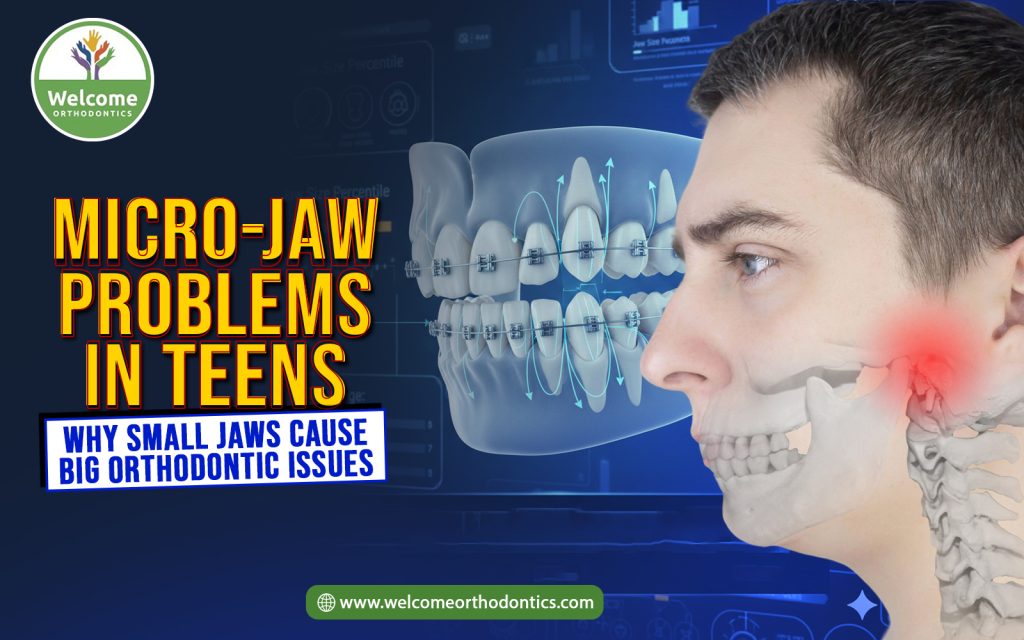
When you picture orthodontic problems in teens, you might imagine crooked teeth, overbites, underbites, or gaps. But what if the true cause of these issues runs deeper, literally? What if the foundation of most teen orthodontic struggles begins with something far more structural and less visible: a small or underdeveloped jaw?
Micro-jaw problems, also known as jaw underdevelopment or insufficient jaw growth, are becoming increasingly common among teenagers. These aren’t just cosmetic concerns. They trigger a chain reaction that affects facial development, breathing, sleep quality, long-term dental health, and self-confidence.
And here’s the surprising part: many parents don’t discover these jaw-related issues until their child’s orthodontic problems are already advanced. Even more surprising? Modern lifestyles, soft diets, prolonged screen time, allergies, and even genetics, play a major role in shrinking the jaws of today’s teens.
This comprehensive guide explores everything you need to know about micro-jaw issues in teens: what causes them, how they impact oral and overall health, and how early orthodontic intervention can prevent severe complications. You’ll also learn why treatments like expansion appliances, growth-guided orthodontics, and braces remain essential, not just for teens, but for adults seeking solutions such as teeth braces for adults in California or affordable and quality braces for functional and aesthetic improvement.
Let’s break down the real reasons small jaws create big problems, and what you can do to fix them.
What Are Micro-Jaw Problems?
A micro-jaw is simply an underdeveloped or smaller-than-normal upper or lower jaw. In medical terms:
- A small upper jaw = maxillary deficiency
- A small lower jaw = mandibular deficiency
- Small upper and lower jaws = bimaxillary deficiency
These structural issues influence far more than appearance. Jaws serve as the anchor for:
- Teeth alignment
- Tongue placement
- Facial profile
- Airway space
- Bite function
When the jaw is too small, every one of these components is affected. This is why jaw underdevelopment causes orthodontic challenges like:
- Crowding
- Overbites
- Narrow arches
- Impacted teeth
- Crossbites
- Sleep-disordered breathing
In short: small jaws = big orthodontic issues.
Why Are Micro-Jaw Problems Becoming So Common in Teens Today?
Micro-jaw problems aren’t new, but they’ve become dramatically more prevalent in the last few generations. Anthropologists, orthodontists, and airway health experts believe three primary factors are driving this change:
Modern Diets Are Softer Than Ever
For most of human history, children ate tough, fibrous foods that required extensive chewing. This chewing stimulated jaw expansion and bone development.
Today’s teen diets? Smoothies. Soft breads. Pasta. Nuggets. Processed snacks.
The lack of chewing means:
- Jaw muscles weaken
- Bones fail to expand
- Dental arches become narrow
- Teeth don’t have enough room
Studies show that children who chew harder foods tend to have wider jaws and fewer orthodontic issues.
Mouth Breathing & Allergies
Chronic nasal blockage from:
- Allergies
- Asthma
- Deviated septum
- Enlarged adenoids or tonsils
forces teens to breathe through their mouth.
Mouth breathing dramatically alters facial growth because:
- The tongue stays low instead of resting on the palate
- The upper jaw becomes narrow
- The face grows long and narrow (sometimes called “long-face syndrome”)
- The chin appears small or recessed
This leads to a cascade of orthodontic complications.
Poor Oral Posture from Tech Use
Hours spent looking down at screens promote:
- Slouched posture
- Weak oral muscles
- Improper tongue placement
A low tongue posture prevents the palate (upper jaw) from widening naturally.
Genetics Also Play a Role
If one or both parents had orthodontic issues, the likelihood of small jaw growth is higher. However, environmental factors tend to make genetically small jaws even smaller.
Major Orthodontic Problems Caused by Small Jaws in Teens
Small jaws create a domino effect of orthodontic and health issues. Let’s explore the most common consequences.
Crowded Teeth
This is the most visible and widely recognized problem.
A small jaw = not enough room for teeth.
Crowding leads to:
- Crooked teeth
- Overlapping teeth
- Teeth rotating out of alignment
- Difficulty cleaning (higher cavity risk)
Teens with jaw underdevelopment almost always show crowding early on, often before adult teeth fully erupt.
Overbite & Overjet
Small lower jaws (mandibular deficiency) are the leading cause of:
- Overbites (upper teeth vertically covering lower teeth)
- Overjet (“buck teeth”) where front teeth appear to protrude
Functionally, these create:
- Difficulty biting
- Speech challenges
- Premature tooth wear
- Poor lip closure
Aesthetically, they often make teens feel insecure about their appearance.
Narrow Dental Arches
Narrow arches reduce tongue space and contribute to:
- Mouth breathing
- Snoring
- Misaligned bites
- Lack of room for adult molars (especially wisdom teeth)
Narrow jaws often appear as a V-shaped arch instead of a wide U-shape.
Crossbites
When the upper jaw is too narrow, the lower teeth overlap the upper teeth improperly.
Crossbites can cause:
- Jaw shifting
- Facial asymmetry
- Poor bite function
- Extra stress on TMJ (jaw joints)
Impacted Teeth
If the jaw is too small, teeth, especially canines, may become trapped in the bone.
Impacted teeth may require:
- Surgical exposure
- Orthodontic traction
- Longer treatment timelines
TMJ Problems
Small jaws often create a misaligned bite. Over time, this stresses the TMJ and causes:
- Clicking
- Popping
- Jaw pain
- Headaches
- Neck pain
Airway & Breathing Issues
This is one of the most serious, yet commonly overlooked consequences.
Small jaws reduce airway volume, contributing to:
- Snoring
- Mouth breathing
- Sleep apnea
- Restless sleep
- Poor oxygenation
Teens with airway restriction often show:
- Morning fatigue
- Hyperactivity (misdiagnosed as ADHD)
- Dark under-eye circles
- Difficulty focusing
Orthodontic treatments that widen the jaw structure can dramatically improve airflow.
How Micro-Jaw Problems Affect Teen Health Beyond Orthodontics
Jaw underdevelopment is not just a dental issue, it’s a whole-body issue.
Here’s how it impacts overall health:
Poor Sleep Quality
Small jaws reduce airway size, causing micro-arousals during sleep. Teens may sleep 8–10 hours yet feel tired.
Chronic poor sleep contributes to:
- Mood swings
- Behavioral issues
- Trouble focusing
- High stress hormones
- Weakened immunity
Self-Esteem Challenges
Crooked teeth or a recessed jaw can impact confidence, especially for teenagers sensitive to appearance.
Straightening teeth improves:
- Emotional well-being
- Social confidence
- Speech clarity
Long-Term Dental Problems
Untreated small jaws lead to:
- Gum recession
- Tooth wear
- Bite trauma
- Higher cavity risk
- Gum disease
Intervening early prevents adult-stage complications.
Facial Development Issues
Facial harmony depends on balanced jaw growth. Micro-jaw issues can change:
- Lip posture
- Cheek support
- Chin projection
- Facial profile
Proper orthodontics can guide more balanced, attractive facial development.
Early Warning Signs of Micro-Jaw Problems in Teens
Parents often overlook jaw development warning signs. Here’s what to watch for:
- Crowding or rotated teeth
- Late loss of baby teeth
- Mouth breathing
- Snoring or noisy breathing
- Slouching or forward head posture
- Narrow smile
- Gummy smile
- Speech difficulties
- Frequent choking or difficulty chewing
- Chronic allergies or sinus issues
If you notice even a few of these signs, an orthodontic evaluation is important.
How Orthodontists Diagnose Micro-Jaw Issues
A comprehensive orthodontic assessment includes:
Jaw Growth Measurements
Through X-rays and 3D imaging, orthodontists measure:
- Jaw width
- Jaw length
- Airway size
- Facial proportions
Bite Analysis
Orthodontists evaluate:
- Overbite
- Overjet
- Crossbite
- Open bite
Airway Evaluation
Many orthodontists now assess:
- Nasal breathing
- Tongue posture
- Airway constriction
This helps identify airway-related sleep issues.
Growth Prediction
Orthodontists analyze growth charts to predict how much jaw development remains and which treatments will be most effective.
Effective Treatments for Micro-Jaw Problems in Teens
The good news? Teens have growing bones, making it the best time to correct jaw underdevelopment.
Here are the most effective treatments.
Palatal Expanders (Upper Jaw Expansion)
Expanders widen the upper jaw to:
- Create space
- Fix crossbites
- Improve breathing
- Support tongue posture
- Encourage balanced facial growth
Expanders are one of the most powerful tools for treating narrow jaws.
Mandibular Advancement Devices
These appliances stimulate forward growth of the lower jaw. They help:
- Reduce overbite
- Improve chin projection
- Enhance airway space
- Correct bite imbalance
Functional Appliances
Appliances like:
- Herbst
- MARA
- Twin Block
help guide jaw growth in teens who still have active bone development.
Braces or Aligners
Once jaw structure is corrected, braces or aligners are used to:
- Straighten teeth
- Improve bite balance
- Correct spacing and crowding
Teens and adults alike often explore braces or aligners, and adults seeking solutions later in life frequently search for teeth braces for adults in California or affordable and quality braces to correct long-term issues from untreated micro-jaw problems.
Extractions (Only When Absolutely Necessary)
Today’s orthodontic philosophy focuses on expansion, not extraction, whenever possible. But in severe cases, extractions may still be required.
Myofunctional Therapy
Exercises to strengthen:
- Lips
- Tongue
- Facial muscles
help stabilize jaw growth and prevent relapse.
Airway-Focused Orthodontics
This approach prioritizes:
- Nose breathing
- Jaw expansion
- Tongue posture
- Sleep health
It treats the root cause, not just the symptoms.
What Happens If Micro-Jaw Problems Are Not Treated?
Teens often grow into adults with unresolved structural issues. Untreated micro-jaw problems can lead to:
- Chronic TMJ pain
- Sleep apnea
- Severe crowding
- Gum recession
- Increased risk of tooth loss
- Difficulty chewing
- Unbalanced facial appearance
Adults with untreated jaw issues often require longer, more complex treatment, sometimes surgery. This is why many adults search for teeth braces for adults in California to correct childhood jaw problems that were never addressed.
Why Early Orthodontic Intervention Matters
The American Association of Orthodontists recommends a screening by age 7—not because braces are needed early, but because this is the stage when jaw growth patterns and developing bite issues become noticeable. Early intervention gives orthodontists a critical window to influence growth while the bones are still flexible and responsive.
Early intervention allows orthodontists to:
Guide jaw growth
By shaping the way the upper and lower jaws develop, orthodontists can create enough room for permanent teeth, encourage proper bite alignment, and support balanced facial development.
Prevent severe crowding
Addressing narrow jaws or lack of space early on helps teeth erupt into their ideal positions, reducing the likelihood of crowding, overlapping, or impaction later.
Avoid surgery later
When jaw discrepancies are caught and treated early, the need for jaw surgery in adulthood, when bones are no longer growing, can often be minimized or avoided entirely.
Improve airway health
Expanding the jaws creates more room for the tongue and increases nasal airflow, reducing mouth breathing, snoring, and potential sleep-disordered breathing.
Reduce treatment time in teen years
By laying the groundwork early, braces or aligners during adolescence become more efficient, shorter, and less complicated.
Correcting the foundation early ensures smoother, more predictable treatment later, giving teens the best chance at a healthy bite, a balanced face, and a confident smile for life.
How Lifestyle Changes Support Jaw Development
Parents and teens can support orthodontic progress with:
Chewing tough, whole foods
Stimulates jaw muscles and bone growth.
Practicing nasal breathing
Encourages proper facial development.
Limiting screen time posture
Reduces forward head posture and oral muscle imbalance.
Strengthening tongue posture
Tongue resting on the roof of the mouth widens the palate.
Treating allergies and congestion
Supports better airway development.
These habits make orthodontic treatment more effective and help prevent relapse.
Conclusion
Micro-jaw problems may seem minor in the beginning, but their impact reaches far beyond simple dental crowding. These structural issues influence facial development, breathing patterns, sleep quality, chewing efficiency, oral hygiene, and even emotional confidence. A small jaw can restrict airway space, lead to chronic mouth breathing, and contribute to restless sleep, all factors that affect a teen’s daily performance, mood, and long-term health. Left unaddressed, these concerns only become more complicated with age, often requiring extensive treatment in adulthood.
The good news is that early detection and growth-guided orthodontics can dramatically reshape a teen’s future. By supporting proper jaw development during these critical years, orthodontists can create more space for teeth, balance the bite, enhance facial symmetry, and improve breathing. Modern treatments, including braces, expanders, and functional appliances, offer predictable, effective, and life-changing results. And for adults who missed out on early intervention, today’s orthodontic advancements, such as affordable and quality braces or specialized teeth braces for adults in California, make it possible to correct long-standing jaw issues and finally enjoy a healthier, better-functioning smile.
If you’re seeking an orthodontic team that understands how deeply jaw structure influences overall well-being, Welcome Orthodontics stands out for its patient-centered, airway-focused approach. Their expertise in guiding jaw growth and improving facial harmony helps both teens and adults achieve optimal dental health and long-lasting confidence.
A small jaw doesn’t have to create big problems, especially when you have the right orthodontic support. With the guidance of Welcome Orthodontics, your teen can unlock a lifetime of healthier breathing, beautiful alignment, and a confident smile that grows with them.
0 comments on “Micro-Jaw Problems in Teens: Why Small Jaws Cause Big Orthodontic Issues”