

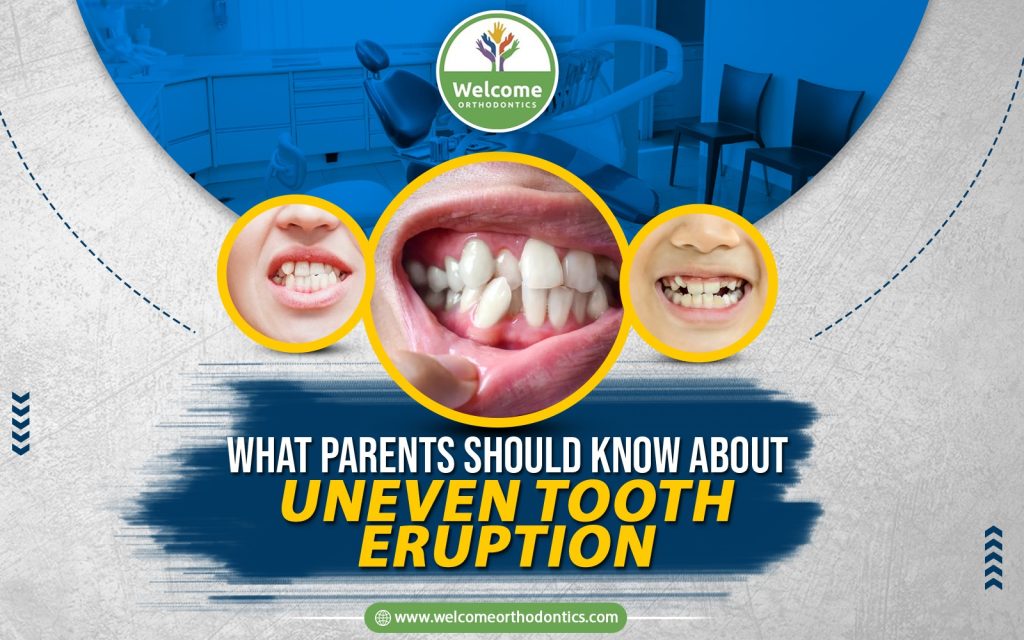
Watching a child’s smile change is one of the most visible signs of growth. Loose baby teeth, newly erupting permanent teeth, and occasional gaps are all part of normal development. However, for many parents, concern sets in when teeth don’t seem to erupt evenly. Parents may notice teeth emerging at different times or in unexpected positions. This pattern, known as uneven tooth eruption, is more common than most families realize.
Uneven eruption is not always a problem, but it can sometimes be an early sign of underlying developmental, orthodontic, or growth-related issues. Because tooth eruption is closely tied to jaw growth, spacing, and bite alignment, irregular patterns can influence how a child’s smile, facial structure, and oral function develop over time. The challenge for parents is knowing what’s normal, what requires monitoring, and when professional evaluation is important.
This article provides a comprehensive guide to uneven tooth eruption in children. We’ll explore what it looks like, why it happens, how it can affect oral and facial development, the warning signs parents should watch for, and how early orthodontic care can help guide teeth into healthier positions. Understanding these factors empowers parents to take timely, informed steps, supporting not just straighter smiles, but healthier growth overall.
Understanding Uneven Tooth Eruption in Children
Uneven tooth eruption refers to a situation where teeth do not emerge into the mouth in a symmetrical or coordinated way. This can mean one side of the mouth erupts faster than the other or teeth emerge at noticeably different heights. Sometimes the difference is subtle, noticeable only to a dentist or orthodontist. Other times, it’s obvious to parents, especially when front teeth are involved.
Tooth eruption follows a general timeline, but it is not perfectly synchronized. Small variations are normal. For example, one central incisor may erupt a few weeks before the other, or molars may come in slightly earlier on one side. These differences often balance out naturally as growth continues.
However, uneven eruption becomes more significant when delays are prolonged, asymmetry persists, or teeth erupt in abnormal positions. This may include teeth emerging too far forward or backward, erupting toward the cheek or palate, or becoming partially trapped beneath the gums. In some cases, uneven eruption is the first visible sign of crowding, jaw imbalance, or missing teeth.
Children often adapt quietly to these changes. They may chew differently, favor one side, or adjust their speech without realizing anything is unusual. Because discomfort isn’t always present, uneven eruption can go unnoticed until it contributes to bite problems or visible misalignment later. Understanding what uneven eruption is, and that it’s not always “just a phase”, helps parents take a proactive, informed approach.
Why Teeth Don’t Erupt Evenly: Common Causes
Uneven tooth eruption rarely has a single cause. Instead, it usually results from a combination of developmental, genetic, and structural factors that influence how teeth and jaws grow.
One of the most common causes is lack of space in the jaw. When the jaw is narrow or shorter than average, permanent teeth may struggle to find room to erupt properly. This can cause some teeth to emerge early, others late, or force them into irregular positions.
Jaw growth discrepancies also play a major role. The upper and lower jaws do not always grow at the same rate. If one jaw lags behind or develops asymmetrically, teeth may erupt unevenly as they attempt to adapt to the available space.
Retained baby teeth are another frequent contributor. When a primary tooth does not fall out on schedule, it can block or deflect the permanent tooth beneath it. This may cause the permanent tooth to erupt off-center, at an angle, or much later than expected.
Missing or undersized permanent teeth can also disrupt eruption patterns. Teeth rely on neighboring teeth as guides during eruption. If a guiding tooth is absent or unusually small, adjacent teeth may drift or erupt unevenly.
Genetic factors influence eruption timing, tooth size, and jaw shape. If parents or siblings experienced crowding, delayed eruption, or impacted teeth, children may face similar challenges.
Finally, habits and environmental factors, such as prolonged thumb sucking, mouth breathing, or early trauma to baby teeth, can alter eruption paths by changing pressure patterns or damaging developing tooth buds.
Early Warning Signs Parents Should Watch For
Parents are often the first to notice when something doesn’t seem quite right with their child’s dental development. Uneven tooth eruption can show up in subtle ways long before it becomes an obvious orthodontic issue. Paying attention to the following signs can help families seek timely guidance.
- Asymmetry in Eruption Timing
When a tooth erupts on one side of the mouth but its matching tooth on the opposite side is delayed for several months, it may indicate an eruption or spacing issue rather than normal variation. - Baby Teeth That Don’t Fall Out on Time
Primary teeth that remain in place well beyond the expected age, especially while permanent teeth are erupting elsewhere, can block or redirect permanent teeth. - Teeth Erupting at Unusual Angles or Positions
Permanent teeth that emerge toward the palate, cheek, or overlap neighboring teeth often signal limited space or guidance problems during eruption. - Crowding in the Front Teeth
Noticeable crowding during the mixed dentition phase (when baby and permanent teeth coexist) can indicate that the jaw may not have enough room for incoming teeth. - Changes in Chewing Behavior
Favoring one side of the mouth, chewing slowly, or avoiding harder foods may reflect bite interference caused by uneven eruption. - Speech Changes or Pronunciation Difficulties
Unevenly erupting teeth can temporarily or persistently affect tongue placement, leading to changes in speech clarity. - Visible Gaps or Irregular Tooth Heights
Teeth appearing at different heights or with uneven spacing can be an early visual cue of eruption imbalance.
While any single sign does not automatically indicate a serious problem, patterns, persistence, or multiple signs together strongly suggest the need for professional orthodontic evaluation.
Common Issues Caused by Abnormal Tooth Eruption
- Dental Crowding and Overlapping Teeth
When teeth erupt unevenly or out of sequence, they may not align properly within the jaw. This can cause overlapping, twisting, or crowding of teeth, making proper cleaning difficult and increasing the risk of cavities and gum problems as permanent teeth continue to erupt. - Delayed or Impacted Permanent Teeth
Abnormal eruption patterns can block permanent teeth from emerging fully. Teeth may remain trapped beneath the gums or erupt much later than expected, sometimes requiring orthodontic intervention or surgical assistance if natural eruption becomes impossible. - Bite Misalignment and Functional Problems
Uneven eruption can disrupt how upper and lower teeth meet. This may lead to bite issues such as overbites, crossbites, or shifting jaw positions, affecting chewing efficiency and placing unnecessary strain on jaw joints and muscles over time. - Facial Asymmetry During Growth
Teeth influence jaw development as a child grows. When eruption is uneven, the jaws may develop asymmetrically, leading to subtle facial imbalance. These changes often become more noticeable during adolescence, especially when combined with uneven bite forces. - Speech and Pronunciation Difficulties
Teeth play an important role in speech clarity. Abnormally erupting teeth can interfere with tongue placement, leading to lisps or difficulty pronouncing certain sounds. While some issues are temporary, persistent eruption problems may require orthodontic guidance. - Increased Risk of Tooth Wear and Sensitivity
Teeth that erupt improperly may receive excessive biting pressure. Over time, this uneven force can cause abnormal enamel wear, tooth sensitivity, or micro-damage, especially if bite imbalances are left uncorrected during growth. - Oral Hygiene Challenges
Teeth that erupt at odd angles or overlap are harder to brush and floss effectively. Plaque buildup in these areas increases the likelihood of cavities and early gum inflammation, even in children with otherwise good oral hygiene habits. - Longer and More Complex Orthodontic Treatment Later
When abnormal eruption is not addressed early, orthodontic treatment during the teenage years often becomes more involved. Early guidance can reduce treatment duration, complexity, and the need for extractions or advanced corrective procedures.
How Orthodontic Evaluation and Early Treatment Can Help
Early orthodontic evaluation plays a crucial role in managing uneven tooth eruption and guiding healthy dental development. An assessment, often recommended around age 7, allows orthodontic professionals to evaluate how teeth are erupting, how the jaws are growing, and whether there is enough space for permanent teeth to come in properly. At this stage, growth is still flexible, making it an ideal time to identify potential concerns before they become more complex.
At Welcome Orthodontics, early orthodontic care is approached with a strong emphasis on prevention and precision rather than rushing into treatment. Not every child with uneven eruption needs braces right away. In many cases, the team may recommend careful monitoring, timely removal of retained baby teeth, or simple space-guiding measures that allow permanent teeth to erupt more naturally. These interceptive steps can significantly reduce the risk of crowding, impaction, or bite problems later on.
When active treatment is necessary, starting early often means treatment is shorter, gentler, and more predictable. By working in harmony with a child’s natural growth, orthodontic care can guide teeth into healthier positions, support balanced jaw development, and minimize the need for more invasive procedures during the teenage years. This growth-focused philosophy helps protect both function and appearance as the smile develops.
What truly sets Welcome Orthodontics apart is their patient-centered approach. Parents are given clear explanations, honest guidance, and individualized recommendations based on their child’s unique development, not a one-size-fits-all plan. This clarity removes uncertainty and helps families feel confident about next steps. By combining early evaluation, thoughtful planning, and compassionate care, Welcome Orthodontics helps children achieve healthier smiles while giving parents peace of mind at every stage of growth.
Myths About Uneven Tooth Eruption, Debunked
Myth: Uneven tooth eruption is always normal and will correct itself
While minor timing differences are common, prolonged or worsening uneven eruption often points to spacing or growth issues. Without evaluation, these problems may persist and become harder to correct later.
Myth: If my child isn’t in pain, there’s nothing to worry about
Many orthodontic concerns develop quietly. Uneven eruption can affect bite alignment and jaw growth long before pain or discomfort appears, which is why early assessment is important.
Myth: Orthodontic care should only start after all permanent teeth erupt
Waiting too long can limit treatment options. Early evaluations allow orthodontists to guide eruption and jaw growth while development is still flexible, often preventing more complex treatment later.
Myth: Early orthodontic treatment means braces twice
Early care does not automatically lead to two phases of braces. In many cases, it reduces treatment time or eliminates the need for extensive correction during adolescence.
Myth: Baby teeth don’t matter much since they fall out anyway
Baby teeth play a critical role in guiding permanent teeth. Retained or poorly positioned baby teeth can disrupt eruption paths and contribute to crowding or impaction.
Myth: Orthodontics is only about straightening teeth
Orthodontic care supports healthy eruption, proper bite function, jaw development, and long-term oral health, not just cosmetic alignment.
Myth: Uneven tooth eruption means my child will definitely need braces
Uneven eruption does not automatically mean braces are required. Many cases resolve with monitoring, simple interceptive steps, or natural growth guidance. Early orthodontic evaluation helps determine whether treatment is needed, or if observation is sufficient, avoiding unnecessary intervention.
Conclusion
Uneven tooth eruption is a common part of childhood development, but it should never be dismissed without understanding the bigger picture. While many eruption differences resolve naturally, others signal underlying issues related to space, jaw growth, or dental development that benefit from early attention.
By recognizing warning signs, seeking timely orthodontic evaluation, and understanding how growth influences eruption, parents can play a proactive role in their child’s oral health journey. Early care focuses on guiding development at the right moment to support healthy function and balanced growth.
With the right monitoring and expert support, uneven tooth eruption does not have to lead to long-term problems. Families who prioritize early evaluation and thoughtful care can feel confident knowing they are giving their child the best foundation for a healthy, well-aligned smile that lasts into adulthood.
0 comments on “What Parents Should Know About Uneven Tooth Eruption”