

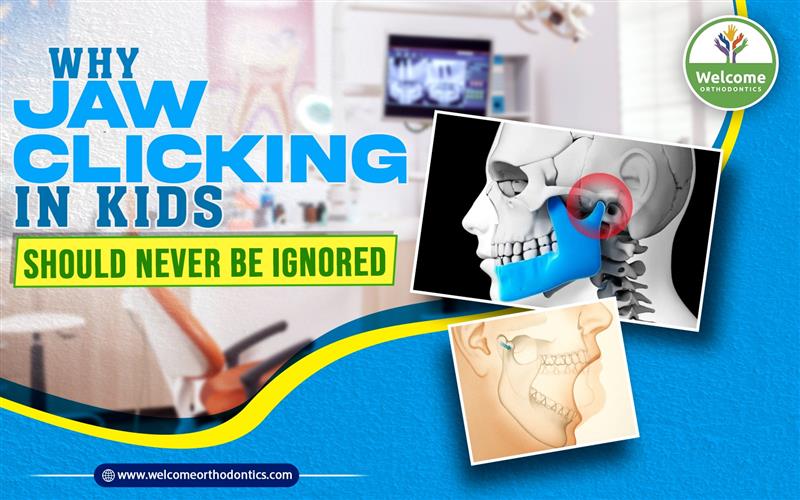
Jaw clicking in children is often brushed off as a harmless quirk, something they’ll outgrow as their bodies develop. Parents may notice a soft popping sound when their child chews, yawns, or opens their mouth wide and assumes it’s nothing to worry about, especially if there’s no immediate pain. However, jaw clicking is rarely random. In many cases, it is an early sign that the jaw joints, bite, or surrounding muscles are not working together as smoothly as they should.
During childhood and adolescence, the jaws are still growing and highly adaptable. This makes the early years a critical window for identifying and correcting functional problems before they become more serious. Jaw clicking can be linked to issues such as uneven jaw growth, bite imbalances, teeth crowding, or strain on the temporomandibular joint (TMJ). Left unaddressed, these problems may progress beyond clicking sounds and lead to discomfort, headaches, chewing difficulties, facial asymmetry, or long-term joint complications.
What makes jaw clicking especially concerning is that children don’t always describe discomfort clearly. They may adapt to subtle limitations or ignore sensations they assume are normal. As a result, jaw clicking is frequently overlooked until symptoms worsen or interfere with daily activities like eating, speaking, or sleeping.
This article explores why jaw clicking in kids should never be ignored, what causes it, how it can affect growth and oral health, and when professional evaluation is necessary. By understanding the early warning signs and the importance of timely intervention, parents can take proactive steps to protect their child’s jaw health, comfort, and long-term well-being, long before minor sounds turn into major concerns.
Understanding Jaw Clicking in Children
Jaw clicking in children refers to a popping, clicking, or snapping sound that occurs when a child opens or closes their mouth, chews, yawns, or moves their jaw from side to side. This sound often originates from the temporomandibular joint (TMJ), the joint that connects the lower jaw to the skull and allows essential movements needed for speaking, chewing, and swallowing. While occasional joint noises can happen in adults, jaw clicking in children deserves closer attention because their jaws are still developing.
In many cases, jaw clicking is painless at first, which is why it is frequently overlooked. Children may not complain, and parents may only notice the sound intermittently. However, the absence of pain does not mean the absence of a problem. Jaw clicking often signals that the joint, surrounding muscles, or bite alignment is not functioning optimally. In growing children, even minor functional imbalances can influence how the jaw develops over time.
One common cause of jaw clicking is a slight misalignment within the TMJ. Inside the joint is a small cartilage disc that helps the jaw move smoothly. If this disc shifts out of position, the jaw may click as it moves over the disc instead of gliding normally. In children, this can occur due to uneven jaw growth, bite discrepancies, or habits such as clenching, grinding, or chewing on one side of the mouth.
Jaw clicking can also be related to dental development. As baby teeth fall out and permanent teeth erupt, changes in bite alignment can temporarily alter how the jaws meet. While some mild clicking during transitional phases may resolve on its own, persistent or worsening sounds often indicate that the bite is not balancing properly as the jaws grow.
Importantly, children may adapt to jaw irregularities without realizing it. They might avoid certain foods, chew only on one side, or limit how wide they open their mouths, subtle behaviors that mask underlying strain. Over time, this compensation can place additional stress on the jaw joints and muscles.
Understanding jaw clicking as an early functional signal rather than a harmless noise helps parents take a proactive approach. Early awareness allows for monitoring, evaluation, and timely guidance, reducing the risk of long-term joint discomfort, bite problems, or facial growth imbalances as the child matures.
Common Causes of Jaw Clicking in Kids
Jaw clicking in children usually has a clear underlying cause related to growth, bite alignment, or jaw function. Presenting these causes individually helps parents better understand what may be contributing to the issue.
- Uneven Jaw Growth
When the upper and lower jaws grow at different rates, the temporomandibular joint (TMJ) may not align properly. This imbalance can cause the joint’s cartilage disc to shift slightly, resulting in clicking or popping sounds during movement. - Bite Misalignment
Conditions such as overbites, underbites, crossbites, or crowded teeth can prevent the jaws from meeting evenly. To compensate, the lower jaw may shift during chewing or speaking, placing extra strain on the joint and causing clicking. - Teeth Grinding or Clenching
Some children grind or clench their teeth, often during sleep. This repeated pressure overworks the jaw muscles and joints, increasing the likelihood of joint noises and functional fatigue. - Oral Habits and Chewing Patterns
Habits like chewing mostly on one side, excessive gum chewing, nail biting, or resting the chin on the hand can create uneven forces on the jaw. Over time, these imbalances may disrupt normal joint movement. - Trauma or Minor Injury
Falls, sports-related impacts, or sudden jaw strain can affect joint alignment. Even mild injuries may alter how the jaw functions during growth, leading to persistent clicking if not evaluated.
Understanding these causes helps parents recognize that jaw clicking is often a sign of functional imbalance rather than a harmless habit, making early evaluation important.
How Jaw Clicking Affects Oral Health, Growth, and Daily Function
Jaw clicking in children is not just an isolated sound, it can be a signal that the jaw joints and surrounding structures are under strain. When the temporomandibular joint (TMJ) does not move smoothly, it can affect multiple aspects of a child’s oral health and overall development, especially during periods of active growth.
From an oral health perspective, ongoing jaw imbalance can lead to uneven bite forces. When one side of the jaw works harder than the other, teeth may experience uneven wear, increasing the risk of sensitivity or enamel damage over time. Children may also begin favoring one side while chewing, which can further reinforce asymmetry in jaw function and muscle development.
Jaw clicking can also influence facial and skeletal growth. During childhood and adolescence, the jaws are still forming. Persistent joint strain or compensatory jaw movements can affect how the lower jaw positions itself as it grows. This may contribute to facial asymmetry, altered jaw posture, or worsening bite discrepancies as the child matures.
Daily function can be affected as well. Some children with jaw clicking experience subtle discomfort, stiffness, or fatigue when eating tougher foods. Others may avoid opening their mouths fully when speaking or yawning. Over time, this limited range of motion can interfere with clear speech, efficient chewing, and even breathing patterns during sleep.
Perhaps most importantly, children often adapt quietly to these limitations without realizing they are not normal. Jaw clicking, when left unaddressed, can progress from a harmless sound to a functional issue that impacts comfort, growth, and long-term jaw health.
Warning Signs That Jaw Clicking Needs Professional Attention
Jaw clicking in children should be evaluated by a professional when it is persistent or accompanied by other symptoms. The following warning signs help indicate when jaw clicking may reflect a deeper functional issue rather than a harmless sound.
- Jaw Clicking With Pain or Discomfort
Clicking that occurs alongside jaw soreness, facial pain, or tenderness near the ears may signal joint inflammation or muscle strain. - Difficulty Chewing or Avoiding Certain Foods
Children may favor soft foods, chew on one side, or eat slowly due to jaw discomfort. - Limited or Restricted Jaw Movement
Trouble opening the mouth fully, stiffness, or a locking sensation when yawning can indicate joint interference. - Frequent Headaches or Ear Symptoms
Jaw strain can radiate pain to the head or ears, sometimes mistaken for unrelated issues. - Neck, Shoulder, or Facial Muscle Tension
Overworked jaw muscles may cause tightness or discomfort in surrounding areas. - Behavioral or Eating Changes
Irritability, fatigue, or reluctance to eat can reflect underlying jaw discomfort children may not verbalize.
When jaw clicking is ongoing or paired with these signs, professional evaluation is important to protect jaw function and healthy development.
How Orthodontic Treatment Can Address Jaw Clicking in Growing Kids
Orthodontic treatment plays an important role in addressing jaw clicking in growing children by focusing on the underlying structural causes rather than just the symptoms. Because a child’s jaws, teeth, and joints are still developing, orthodontic care can guide growth in a way that promotes balanced jaw function and reduces stress on the temporomandibular joint (TMJ).
One of the primary ways orthodontic treatment helps is by correcting bite imbalances. When teeth do not meet evenly, the lower jaw may shift during chewing or speaking to find a more comfortable position. Over time, these repeated shifts can strain the jaw joints and lead to clicking sounds. Orthodontic appliances can help align the teeth so the bite closes in a more stable, natural position, reducing unnecessary joint movement.
Orthodontics can also support proper jaw positioning during growth. In cases where the upper or lower jaw is underdeveloped or positioned incorrectly, early orthodontic intervention can guide growth while the bones are still adaptable. Improving jaw alignment can relieve pressure on the TMJ and allow smoother jaw motion.
Additionally, orthodontic treatment can help reduce muscle strain and harmful habits. By creating a balanced bite, the jaw muscles no longer need to overcompensate, which can ease tension and fatigue. This often leads to a decrease in clicking and improved comfort during daily activities such as eating and speaking.
By addressing jaw clicking early, orthodontic treatment helps protect long-term jaw health, supports normal facial development, and prevents minor functional issues from progressing into more serious joint problems later in life.
Why Early Orthodontic Evaluation Makes All the Difference
Early orthodontic evaluation can have a profound impact on how jaw clicking is managed in children. Because the jaws, teeth, and temporomandibular joints are still developing, identifying issues at the right time allows orthodontists to guide growth rather than simply correct problems after they become more severe. An evaluation during the early years helps determine whether jaw clicking is temporary or a sign of an underlying structural imbalance.
When jaw clicking is assessed early, treatment options are often more conservative and less invasive. Instead of managing pain or joint strain later, orthodontists can focus on correcting bite discrepancies, improving jaw alignment, and supporting balanced muscle function while growth is still active. This proactive approach can reduce the risk of long-term joint issues, facial asymmetry, or chronic discomfort.
Early evaluation also helps prevent compensation patterns from forming. Children may unconsciously shift their jaw, avoid certain foods, or alter speech to minimize discomfort. Addressing the cause early helps stop these habits before they affect facial development or daily function.
Most importantly, early orthodontic evaluation provides peace of mind for families. It ensures that jaw clicking is monitored appropriately and that timely intervention is available if needed, protecting comfort, function, and healthy development well into adolescence and adulthood.
How Welcome Orthodontics Approaches Jaw Clicking in Children
Jaw clicking requires more than a quick visual exam, it demands a thoughtful, growth-focused approach that looks at how a child’s jaws, teeth, muscles, and joints are working together. At Welcome Orthodontics, jaw clicking in children is evaluated as a functional concern, not just a temporary symptom.
The team begins with a comprehensive assessment that considers bite alignment, jaw movement patterns, facial growth, and developmental stage. Advanced diagnostic tools, including digital imaging and detailed bite analysis, help identify subtle imbalances that may be placing stress on the temporomandibular joints. This level of precision allows problems to be addressed early, often before pain or long-term damage develops.
What sets Welcome Orthodontics apart is their conservative, child-centered philosophy. Treatment is never rushed or one-size-fits-all. In many cases, early guidance may involve monitoring growth, improving bite balance, or gently supporting jaw development rather than immediately recommending braces. When orthodontic appliances are needed, they are carefully selected to reduce joint strain and support natural jaw function.
Equally important is the practice’s focus on education and comfort. Parents are guided through findings in clear, understandable terms, and children are treated in a calm, reassuring environment designed to reduce anxiety. Collaboration with pediatric dentists or other specialists is encouraged when needed, ensuring fully coordinated care.
By prioritizing early detection, precise planning, and long-term function, Welcome Orthodontics helps children move past jaw clicking toward healthier growth, improved comfort, and lasting confidence.
Conclusion
Jaw clicking in children is often dismissed as a harmless phase, but as this article highlights, it can be an early signal of underlying issues affecting jaw function, bite alignment, and healthy facial development. Because children are still growing, even subtle joint imbalances or bite discrepancies can influence how the jaws and teeth develop over time. Ignoring these early signs may allow minor functional problems to progress into chronic discomfort, chewing difficulties, speech issues, or long-term temporomandibular joint concerns.
The encouraging news is that jaw clicking does not automatically mean something serious or permanent. With early awareness and timely orthodontic evaluation, many contributing factors can be identified and addressed before they escalate. Orthodontic treatment during the growth years focuses on guiding development, improving bite stability, and reducing unnecessary stress on the jaw joints, all of which support smoother jaw movement and better overall function.
Parents play a crucial role by observing changes in their child’s jaw movement, eating habits, and comfort levels. Seeking professional advice when clicking is persistent or accompanied by discomfort allows for proactive, conservative care rather than reactive treatment later.
Ultimately, addressing jaw clicking early is about more than eliminating a sound, it’s about protecting long-term oral health, supporting balanced facial growth, and ensuring a child can eat, speak, and sleep comfortably. By taking jaw clicking seriously and acting early, families can help their children grow with healthier jaws, greater comfort, and confidence that lasts well into adulthood.
0 comments on “Why Jaw Clicking in Kids Should Never Be Ignored”