

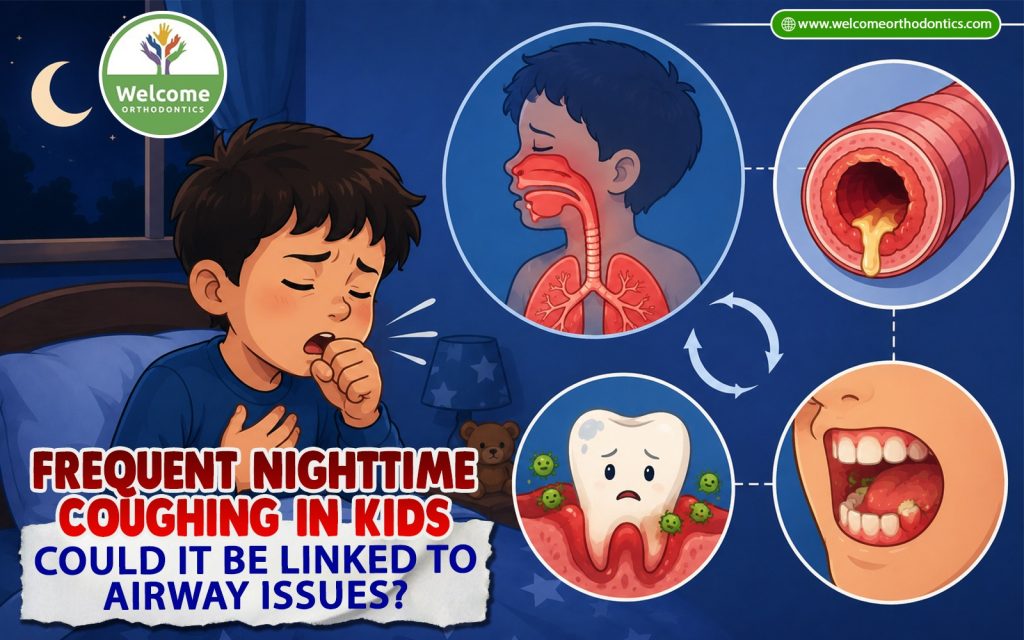
Hearing your child cough repeatedly through the night can be worrying and exhausting for the whole family. Many parents assume nighttime coughing is caused by seasonal allergies, a lingering cold, asthma, or dry air. Sometimes that’s true. But when the coughing becomes frequent, persistent, or happens without obvious illness, it may point to something less commonly discussed: airway-related breathing issues.
In recent years, Airway orthodontics has brought more attention to the connection between breathing, jaw development, sleep quality, and overall health in children. While most people associate orthodontics with straight teeth, airway-focused evaluation looks deeper at how the structure of the jaws and airway may influence the way a child breathes, especially during sleep.
Nighttime coughing can sometimes be one of the body’s subtle responses to restricted airflow, mouth breathing, or disrupted breathing patterns. Because these issues often develop gradually, they are easy to overlook or mistake for unrelated concerns.
Understanding the possible relationship between nighttime coughing and airway development can help parents recognize when it may be time to look beyond temporary explanations and consider the bigger picture of their child’s breathing and growth.
Why Nighttime Coughing Is Different from Daytime Coughing
Coughing during the day and coughing during sleep are not always caused by the same thing. During the day, children are upright, more active, and breathing patterns naturally change with movement and activity. At night, however, the body shifts into a completely different state.
When children sleep:
- Muscles relax
- Breathing slows down
- Airway tissues become less firm
- Head and jaw positioning change
If the airway is already narrow or breathing is less efficient, these nighttime changes can make airflow more difficult. The body may respond with coughing, throat clearing, restless sleep, or frequent waking. In some children, nighttime coughing occurs because the body is trying to reopen or protect the airway. While occasional coughing during illness is normal, repeated nighttime coughing without clear illness may deserve closer attention.
The Connection Between Airway Development and Breathing
The airway is closely connected to the structure of the face and jaws. As children grow, their upper and lower jaws help shape the space available for airflow through the nose and throat.
When jaw development is balanced:
- Nasal breathing is easier
- The tongue rests properly against the roof of the mouth
- Air moves more efficiently during sleep
However, when the jaws develop too narrowly or the lower jaw sits too far back, airway space may become more limited.
This can contribute to:
- Mouth breathing
- Noisy breathing during sleep
- Dryness in the throat
- Airway irritation
- Poor-quality sleep
Over time, these patterns may increase the likelihood of nighttime coughing or throat discomfort. Because airway development and breathing are deeply connected, orthodontic evaluation today often looks beyond teeth alignment alone.
How Mouth Breathing May Trigger Nighttime Coughing
One of the most overlooked causes of nighttime throat irritation in children is chronic mouth breathing. Nasal breathing naturally filters and humidifies air before it reaches the throat and lungs. Mouth breathing bypasses this process entirely. As a result, the throat becomes drier and more irritated during sleep.
Children who breathe through their mouth at night may experience:
- Dry throat upon waking
- Increased throat sensitivity
- Frequent coughing during sleep
- Restless sleep patterns
Mouth breathing itself is often a sign that nasal airflow is restricted or less efficient. This may happen due to:
- Narrow jaw development
- Enlarged tonsils or adenoids
- Habitual breathing patterns
- Airway limitation
In many cases, children adapt so well that parents don’t realize mouth breathing has become their normal pattern.
Subtle Signs That Airway Issues May Be Contributing
Nighttime coughing rarely appears alone. Often, other small signs are present as well.
Restless Sleep
Children with airway-related concerns may toss and turn frequently or sleep in unusual positions that help them breathe more comfortably.
Snoring or Noisy Breathing
Even light snoring or heavy breathing during sleep may indicate airflow resistance.
Mouth Open During Sleep
Parents may notice their child consistently sleeps with their mouth open instead of breathing through the nose.
Difficulty Waking Up
Despite getting enough hours of sleep, some children wake up groggy or unusually tired.
Daytime Fatigue or Irritability
Poor sleep quality often affects mood, energy, and focus during the day.
Frequent Dry Mouth
Mouth breathing can leave children waking with dry lips, dry mouth, or thirst.
Slow Eating or Chewing Difficulties
Airway-related functional issues sometimes affect chewing coordination and eating patterns as well.
Recognizing these subtle patterns can help parents understand that nighttime coughing may be part of a larger breathing-related issue rather than an isolated symptom.
Why Airway Problems Are Often Missed
One reason airway-related concerns go undetected is because the symptoms do not always seem dramatic. Children often continue functioning normally during the day, even while their sleep quality is being affected.
Parents may assume:
- The child is simply a “light sleeper”
- Restlessness is normal
- Mouth breathing is just a habit
- The cough is allergy-related
While these explanations may sometimes be correct, they can also delay identification of underlying airway concerns.
Another challenge is that many breathing-related symptoms happen during sleep, when parents may not fully observe them. Because the body adapts gradually, children often don’t complain, they simply adjust to the way they breathe. This is why awareness matters so much. Early recognition can help families seek guidance before long-term developmental effects become more noticeable.
How Poor Airway Function Can Affect Overall Development
Breathing affects much more than the lungs. In growing children, airway function can influence sleep quality, energy levels, facial growth, oral development, and even emotional regulation.
Children who struggle with efficient nighttime breathing may experience:
- Reduced quality of deep sleep
- Daytime fatigue
- Difficulty concentrating
- Increased irritability
- Changes in chewing and swallowing patterns
Airway-related breathing patterns may also influence:
- Jaw development
- Tongue posture
- Bite alignment
- Dental crowding
Because the face and jaws are still developing during childhood, airway-related issues can gradually affect how these structures grow over time.
This is one reason airway orthodontics has become increasingly important. Instead of focusing only on visible alignment issues, airway-focused evaluation considers how jaw structure, breathing patterns, and development work together.
How Orthodontic Evaluation Can Help Identify Hidden Airway Concerns
Modern orthodontic care often involves evaluating more than just the position of the teeth.
A comprehensive airway-focused evaluation may assess:
- Jaw width and positioning
- Nasal breathing patterns
- Tongue posture
- Bite alignment
- Facial growth patterns
- Airway space
Because children’s jaws are still growing, early guidance can often help support healthier breathing and development during important growth years.
Depending on the child’s needs, care may involve:
- Monitoring development
- Supporting jaw growth
- Expanding narrow arches
- Improving oral function
- Encouraging healthier breathing patterns
The goal is not simply cosmetic improvement, it’s supporting better long-term function and comfort.
Why Early Awareness Matters
Parents do not need to diagnose airway problems themselves. The most important step is simply recognizing when persistent nighttime symptoms deserve closer evaluation.
Early awareness matters because:
- Growth patterns are still adaptable during childhood
- Small concerns may become larger over time
- Breathing patterns influence multiple aspects of development
- Early intervention may reduce future complications
When nighttime coughing is persistent and accompanied by signs like mouth breathing, restless sleep, or daytime fatigue, it may be worth exploring whether airway-related factors are involved.
Why Families Choose Welcome Orthodontics
When parents begin noticing concerns related to breathing, sleep, or jaw development, having the right orthodontic team makes a meaningful difference.
At Welcome Orthodontics, care focuses on understanding how breathing, airway development, jaw growth, and oral function are connected. Instead of evaluating only visible alignment concerns, the team takes a comprehensive approach that looks at the full picture of a child’s development.
Using advanced diagnostic tools and a conservative treatment philosophy, evaluations are designed to identify subtle airway-related concerns that may otherwise go unnoticed. Families receive clear explanations and individualized recommendations based on the child’s unique growth pattern and needs. With over 30 years of clinical experience, Dr. Tavakoli combines orthodontic expertise with thoughtful, patient-centered care. Families also appreciate the practice’s flexible financing options, transparent communication, and personalized treatment planning. Most importantly, children are treated in a supportive environment where long-term health, comfort, and healthy development are prioritized alongside aesthetics.
Conclusion
Frequent nighttime coughing in children is not always just a lingering cold or seasonal irritation. In some cases, it may reflect deeper issues related to breathing patterns, airway development, or mouth breathing during sleep.
Because children often adapt quietly, these concerns can easily go unnoticed for years. Understanding the connection between nighttime breathing, jaw development, and overall health allows parents to look beyond surface-level symptoms and recognize when a child may need a more comprehensive evaluation. This growing awareness is one reason Airway orthodontics continues to play such an important role in pediatric orthodontic care. By evaluating not just teeth alignment, but also airway function and jaw development, orthodontists can help identify hidden concerns early and support healthier long-term outcomes.
With thoughtful, growth-focused care from Welcome Orthodontics, families can feel confident knowing their child’s breathing, development, and smile are being considered as part of one complete picture.
0 comments on “Frequent Nighttime Coughing in Kids: Could It Be Linked to Airway Issues?”