

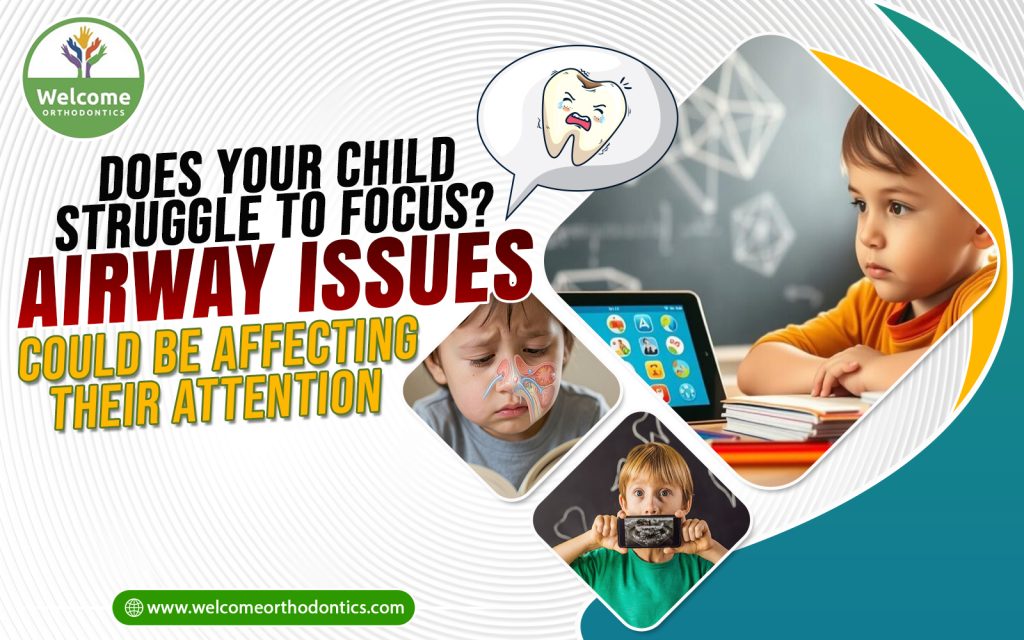
It’s a concern many parents quietly carry: “Why is my child having trouble focusing?”
You might notice it during homework time, in conversations with teachers, or in everyday routines, difficulty staying attentive, restlessness, or a tendency to get easily distracted.
Often, these challenges are attributed to behavioral factors, screen time, or even conditions like ADHD. While those can absolutely play a role, there’s another important piece of the puzzle that is often overlooked, your child’s ability to breathe properly, especially during sleep.
Breathing isn’t just about oxygen, it directly impacts sleep quality, brain function, and energy levels. When a child’s airway is restricted, even slightly, it can disrupt sleep patterns in ways that aren’t always obvious. And when sleep is compromised, attention, mood, and learning can all be affected.
What makes this connection so important is that it’s frequently missed. Many children with airway-related issues don’t appear “sick.” They simply adapt, breathing through their mouth, sleeping restlessly, or waking up tired without fully realizing it.
Understanding this hidden link between airway health and attention can help parents look beyond surface-level symptoms and take a more complete, proactive approach to their child’s well-being.
Why Focus Problems in Children Aren’t Always What They Seem
When a child struggles to focus, the first instinct is often to look at behavior, environment, or learning style. Parents may adjust routines, limit screen time, or explore academic support—all of which can be helpful. But in many cases, these surface-level factors don’t fully explain why a child seems consistently tired, distracted, or overwhelmed. Sometimes, the root cause lies deeper, in how the child’s body is functioning, not just how they’re behaving.
Common assumptions parents hear
Many families are told that focus issues are linked to familiar causes. Attention disorders are often the first consideration, especially when symptoms resemble inattention or hyperactivity. Screen time is another common explanation, as excessive exposure can affect attention spans. Parents may also hear that lack of discipline, inconsistent routines, or academic pressure are contributing factors.
While these explanations are valid in certain situations, they don’t always account for the full picture. A child may have structured routines, limited screen time, and strong support at home, yet still struggle to focus. This is often where frustration begins, because the usual solutions don’t seem to work.
The missing piece: physical factors
Focus is not just a matter of willpower or behavior, it’s deeply connected to biology. A child’s ability to concentrate depends on how well their brain and body are functioning together. Three key factors play a major role: the quality of sleep they get, how well oxygen is delivered during rest, and how effectively the brain recovers overnight.
If sleep is disrupted or oxygen levels are not optimal, the brain doesn’t get the recovery time it needs. This can lead to mental fatigue, slower processing, and difficulty maintaining attention, even if the child is trying their best.
The role of sleep in attention
Sleep is one of the most critical components of a child’s development. During deep, restorative sleep, the brain processes information, strengthens memory, and regulates emotions. It’s also when the body resets for the next day.
When sleep quality is compromised, even in subtle ways, these processes are affected. A child may wake up feeling unrested, even after a full night in bed. Over time, this can show up as difficulty concentrating, a shorter attention span, and increased irritability. These changes are often mistaken for behavioral issues, when in reality, they are signs of underlying fatigue.
Why it’s often overlooked
One of the biggest challenges with sleep-related issues is that they are not always obvious. Many children still appear to “sleep through the night,” so parents assume their rest is adequate. However, sleep can be fragmented or less restorative without causing full awakenings.
Another reason these issues are missed is that the symptoms show up during the day, at school, during homework, or in social situations, rather than at night. This disconnect makes it harder to trace the problem back to sleep or breathing.
Finally, the link between breathing and focus is not widely recognized. Most parents don’t immediately associate airway function with attention or behavior. As a result, airway-related causes can go undetected for long periods, even when signs are present.
Understanding that focus is influenced by physical factors, not just behavior, can be a turning point. It allows parents to look beyond assumptions and consider whether something deeper may be affecting their child’s ability to thrive.
Understanding Airway Issues in Children
Airway issues refer to any condition that limits how easily air flows in and out of the body, especially during sleep.
What airway restriction means
An airway restriction doesn’t always mean a complete blockage. It can be:
- A narrow airway
- Reduced airflow during sleep
- Subtle breathing resistance
Even mild restrictions can affect sleep quality.
Mouth breathing vs nasal breathing
Breathing through the nose is the body’s natural and optimal way to breathe. It:
- Filters and humidifies air
- Supports proper tongue posture
- Promotes balanced jaw development
Mouth breathing, on the other hand:
- Bypasses natural filtration
- Often indicates airway limitation
- Can affect facial and dental development
How jaw development and airway are connected
The size and position of the jaws play a major role in airway space.
- A narrow upper jaw can reduce nasal space
- A recessed lower jaw can limit airway depth
- Improper tongue posture can affect both
This is why airway orthodontics focuses not just on teeth, but on how jaw development supports breathing.
Why airway issues go unnoticed
Many children with airway concerns:
- Don’t complain about breathing
- Adapt to mouth breathing
- Appear healthy during the day
Because the problem often occurs during sleep, it can remain hidden without proper evaluation.
How Airway Problems Affect Attention and Behavior
When a child’s airway is restricted, the effects are not limited to breathing, they extend to sleep, brain function, and daily behavior.
Impact of poor-quality sleep
Even if a child sleeps for 8–10 hours, the quality of that sleep matters more than the duration.
With airway restriction:
- Sleep may be fragmented
- Deep sleep stages may be reduced
- The brain may not fully recover
Reduced oxygen flow and brain performance
The brain depends on consistent oxygen supply during sleep.
When breathing is compromised:
- Oxygen levels may fluctuate
- Brain function can be affected
- Cognitive performance may decline
Symptoms that mimic attention disorders
Airway-related sleep issues can lead to:
- Inattention
- Hyperactivity
- Impulsivity
- Difficulty following instructions
These symptoms often resemble ADHD, which can lead to misinterpretation.
Emotional and behavioral effects
Children may also experience:
- Irritability
- Mood swings
- Low frustration tolerance
- Difficulty managing emotions
These changes are often linked to fatigue rather than behavior alone.
Early Signs Parents Should Watch For
Because airway issues are often subtle, recognizing early signs can make a significant difference. These signs don’t always appear all at once, and they may seem unrelated at first. But when patterns start to form, they can offer important clues about how your child is breathing and sleeping.
Mouth breathing
Children who frequently breathe through their mouth, especially when they are relaxed, watching TV, or sleeping, may be compensating for limited nasal airflow. You might notice their lips are often parted or that they rely on mouth breathing even when they are not congested. Over time, this can influence jaw development, tongue posture, and overall facial growth, making it more than just a simple habit.
Snoring or noisy breathing
Occasional snoring during illness can be normal, but regular snoring is not typical in children. Even light, consistent snoring or noisy breathing during sleep can indicate that airflow is partially restricted. Some children may also make sounds like gasping, snorting, or heavy breathing at night. These signs suggest that the body is working harder to maintain proper airflow.
Restless sleep
Sleep should be calm and restorative, but children with airway concerns often move frequently during the night. You may notice tossing and turning, frequent position changes, or unusual sleep postures, such as sleeping with the neck extended or mouth open. These movements are often the body’s way of trying to find a position that allows easier breathing.
Difficulty waking up
Even after a full night in bed, some children struggle to wake up feeling refreshed. They may appear unusually groggy, slow to respond, or resistant to getting out of bed. You might need to call them multiple times or physically wake them. This can be a sign that their sleep quality, not just sleep duration, is being affected.
Daytime fatigue and poor focus
Children with disrupted sleep don’t always look tired in the traditional sense. Instead, they may seem restless or overly active while still experiencing low energy internally. They might have difficulty staying focused, lose track of tasks easily, or appear mentally fatigued during school or homework. This inconsistency can be confusing, as they may seem energetic at times but struggle with sustained attention.
Behavioral changes
Sleep and breathing issues can also affect emotional regulation. Parents and teachers may notice increased irritability, mood swings, or a lower tolerance for frustration. Children may become more sensitive, impatient, or easily overwhelmed by situations they previously handled well. These changes are often linked to fatigue rather than intentional behavior.
If several of these signs are present, especially in combination, it may be worth looking beyond surface-level explanations. Early awareness allows for timely evaluation and helps ensure that underlying issues are identified before they begin to affect long-term development.
How Orthodontic Evaluation and Airway-Focused Care Can Help
For many parents, the turning point comes with clarity, understanding that focus issues may have a physical component.
The role of airway orthodontics
Airway orthodontics looks beyond teeth alignment to evaluate:
- Jaw structure
- Airway space
- Breathing patterns
It focuses on supporting both function and development.
How jaw development supports breathing
Orthodontic care can help:
- Expand narrow arches
- Improve tongue posture
- Support balanced jaw growth
These changes can positively influence airway space.
Early intervention matters
Because children are still growing:
- The jaws are more adaptable
- Treatment can guide development
- Outcomes are often more effective
Early care is often simpler than treatment later.
How Welcome Orthodontics Supports Children with Airway-Related Concerns
At Welcome Orthodontics, care goes beyond straightening teeth, it focuses on understanding how your child’s development, breathing, and overall well-being are connected. From the very first visit, the goal is to provide clarity. Instead of focusing only on visible alignment, the team evaluates jaw growth, bite function, and airway considerations to identify whether underlying factors may be affecting your child’s sleep and attention.
Using advanced diagnostic tools and a comprehensive approach, subtle airway-related concerns can be identified early, even when they are not obvious. This allows for more informed decisions and more targeted care.
What truly sets Welcome Orthodontics apart is its balanced philosophy. Not every child requires immediate treatment. In many cases, careful monitoring is the best approach. When intervention is needed, it is designed to work with natural growth, supporting both airway function and orthodontic development. With over 30 years of clinical experience, Dr. Tavakoli brings a deep understanding of how structural development influences breathing and behavior. This experience helps determine the right timing and approach for each child.
Parents also benefit from clear communication. Every finding and recommendation is explained in a way that makes sense, helping families feel confident and informed. For those searching for Affordable orthodontics near me, the practice offers flexible financing and works with insurance to make care accessible.
Most importantly, every child receives a personalized plan, because no two children grow, breathe, or develop in the same way.
Conclusion
When a child struggles to focus, it’s natural to look for answers in behavior, environment, or learning style. But sometimes, the root cause lies deeper, within how they breathe, sleep, and develop.
Airway issues are often hidden, but their impact can be significant. By recognizing early signs and understanding the connection between breathing and attention, parents can take a more complete and proactive approach to their child’s health.
Orthodontic evaluation plays an important role in this process. It helps uncover underlying factors that may not be visible but are affecting daily life.
With the right guidance and care from practices like Welcome Orthodontics, families can move from uncertainty to clarity, supporting not just straighter smiles, but better sleep, improved focus, and overall well-being for years to come.
0 comments on “Does Your Child Struggle to Focus? Airway Issues Could Be Affecting Their Attention”