

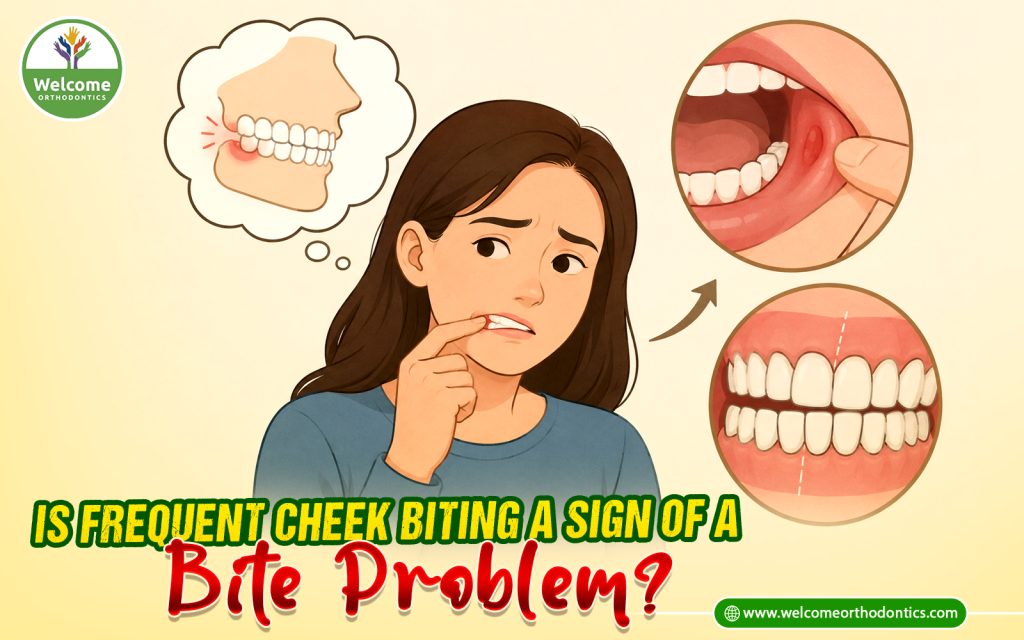
Most people accidentally bite the inside of their cheek once in a while, especially when eating too quickly or talking during a meal. These occasional incidents are usually harmless and heal within a few days. However, when cheek biting happens repeatedly, often in the same location, it may be a sign that something more than simple bad luck is involved.
One possible explanation is the way the upper and lower teeth fit together. The teeth, jaws, cheeks, and facial muscles work as a coordinated system during chewing and speaking. If that balance is disrupted by a bite problem, the soft tissues inside the mouth may become more vulnerable to repeated injury.
Of course, bite alignment is not the only reason someone may frequently bite their cheek. Habits such as unconscious cheek chewing, sharp teeth, or certain dental restorations can also contribute. The key is identifying the underlying cause rather than simply treating the sore area each time it occurs.
In this article, we’ll explore whether frequent cheek biting can indicate an orthodontic problem, the bite conditions that may contribute to it, other possible causes, and when an orthodontic evaluation may be appropriate.
What Is Frequent Cheek Biting?
Frequent cheek biting refers to repeated injury to the inside of the cheek caused by the teeth. Unlike an isolated accident, chronic cheek biting tends to occur regularly, often affecting the same area inside the mouth.
Some people experience it only while eating, while others notice it during speaking or even while resting their jaws. Because the injury recurs before the tissue has fully healed, the affected area may remain sore for extended periods. Understanding whether the problem is accidental, habitual, or related to the bite is the first step toward finding an appropriate solution.
Occasional vs Chronic Cheek Biting
Occasional cheek biting is extremely common and usually happens because of temporary circumstances, such as:
- Eating too quickly
- Talking while chewing
- Taking unusually large bites
- Being distracted during meals
These isolated incidents generally heal without treatment.
Chronic cheek biting is different.
The injury tends to:
- Occur repeatedly
- Affect the same location
- Interfere with eating comfortably
- Return soon after healing
This pattern suggests that the cheek may be entering the bite path repeatedly rather than by chance.
Why the Same Area Gets Bitten Repeatedly
The inside of the cheek lies very close to the upper and lower back teeth.
If the bite closes in a way that consistently traps the cheek tissue, the same spot may be injured over and over again.
Repeated trauma can lead to:
- Persistent tenderness
- Thickened tissue
- Small ulcers
- Slow healing
When this cycle continues, identifying why the tissue keeps entering the bite becomes more important than simply treating the sore itself.
Can Your Bite Really Cause Cheek Biting?
Yes, in some cases it can.
The way the upper and lower teeth meet determines how the cheeks move during chewing. If the bite is uneven or certain teeth contact prematurely, the soft tissue may become trapped between the teeth more easily.
This does not mean everyone who bites their cheek has an orthodontic problem. However, recurring injuries that occur during normal chewing may indicate that the bite deserves closer evaluation.
How the Teeth and Cheeks Normally Work Together
During chewing, the cheeks help guide food toward the chewing surfaces of the back teeth.
Normally:
- The cheeks remain outside the biting surfaces.
- The teeth contact each other smoothly.
- Jaw movements follow a coordinated path.
- Soft tissues stay protected during chewing.
This balanced interaction allows food to be processed efficiently without repeatedly injuring the cheeks.
What Happens When Bite Alignment Changes
When the bite relationship changes, the path of jaw movement may also change.
For example:
- Certain teeth may contact earlier than others.
- The lower jaw may shift before fully closing.
- Some teeth may sit farther inward or outward than expected.
- Uneven tooth contact may alter chewing movements.
As a result, the cheek can become caught between the upper and lower teeth more frequently.
The greater the disruption in bite function, the more likely repeated soft tissue injuries may become.
Bite Problems That May Increase the Risk of Cheek Biting
Several orthodontic conditions can increase the likelihood of recurring cheek biting by changing how the teeth and jaws function together.
Crossbites
A crossbite occurs when certain upper teeth bite inside the lower teeth instead of outside them.
This altered relationship may change the path of jaw closure and reduce the normal space available for the cheeks during chewing.
Depending on which teeth are involved, repeated cheek biting may occur on one side of the mouth more than the other.
Open Bites
Although open bites are often associated with gaps between the teeth, they can also influence how chewing forces are distributed.
When certain teeth fail to contact properly, other areas of the bite may compensate.
These compensations sometimes alter jaw movement enough to increase the chance of trapping soft tissue between the teeth.
Severe Crowding
When teeth overlap significantly or erupt in irregular positions, they may create uneven biting surfaces.
Sharp rotations or teeth positioned outside the normal dental arch can occasionally contact the inside of the cheek during chewing.
Crowding alone does not always cause cheek biting, but it may contribute when combined with other bite discrepancies.
Narrow Dental Arches
The width of the dental arches influences how much room the cheeks have during function.
If the upper dental arch is particularly narrow, the cheeks may sit closer to the chewing surfaces of the back teeth.
This reduced clearance can make accidental cheek biting more likely during normal jaw movements.
Misaligned Molars
The molars perform most of the work involved in chewing.
If the upper and lower molars do not fit together correctly, chewing forces may become uneven.
The resulting changes in jaw movement can occasionally place the cheeks in the path of the biting surfaces.
Functional Jaw Shifts
Some patients naturally move the lower jaw slightly before the teeth fully come together.
This movement, known as a functional jaw shift, often develops because certain teeth interfere with normal closure.
As the jaw slides into a more comfortable position, the cheeks may move differently than intended, increasing the likelihood of repeated injury.
Because these shifts occur automatically, many people are unaware they are happening until an orthodontic examination identifies them.
Other Causes of Repeated Cheek Biting
Not every case of chronic cheek biting is caused by orthodontic problems.
Several other factors may produce similar symptoms.
Stress and Unconscious Cheek Chewing
Some individuals habitually chew the inside of their cheeks during periods of stress, anxiety, or concentration.
Unlike accidental biting while eating, this behavior may occur throughout the day without the person realizing it.
Repeated cheek chewing can create tissue changes that resemble injuries caused by bite problems.
Sharp or Broken Teeth
A chipped tooth, fractured filling, or rough restoration can repeatedly scrape or catch the cheek.
In these situations, smoothing or repairing the affected tooth may resolve the problem without orthodontic treatment.
Wisdom Teeth
Partially erupted wisdom teeth may occasionally alter the way the cheek rests against the back teeth.
Depending on their position, they may contribute to repeated soft tissue irritation, particularly toward the back of the mouth.
Poorly Fitting Dental Restorations
Dental crowns, bridges, or fillings that slightly alter the bite can sometimes change how the teeth contact during chewing.
Even small changes in bite relationships may influence the path of jaw movement and increase the likelihood of cheek injury in certain individuals.
Neuromuscular and Habit-Related Causes
Some people develop unconscious oral habits involving the tongue, lips, or cheeks that make accidental biting more likely.
Others may have neuromuscular conditions that affect jaw coordination or chewing patterns.
Because these situations can resemble orthodontic problems, a thorough examination is often needed to determine the true cause.
Understanding that repeated cheek biting has many possible explanations helps ensure that treatment focuses on the underlying problem rather than simply relieving the symptoms.
Signs That Cheek Biting May Be Related to Your Bite
It is not always easy to tell whether recurring cheek biting is caused by a bite problem or another oral condition. However, certain patterns may suggest that the way the teeth and jaws fit together is contributing to the issue.
Injuries Occur in the Same Location
One of the clearest signs is when the inside of the cheek is bitten repeatedly in exactly the same spot. If the tissue barely has time to heal before being injured again, it may indicate that the cheek consistently enters the path of the teeth during chewing or jaw movement.
Uneven Tooth Contact
Some people notice that certain teeth seem to touch before others when they close their mouth. This uneven contact may change the path of jaw closure and increase the likelihood of trapping the cheek between the teeth.
Jaw Shifting During Chewing
If the lower jaw slides slightly to one side before the teeth fully come together, the movement may change how the cheeks are positioned inside the mouth. Although many people are unaware this shift is occurring, orthodontists often identify it during a bite evaluation.
Difficulty Chewing Comfortably
Children or adults with bite-related cheek injuries may unconsciously change the way they chew to avoid discomfort.
Signs may include:
- Chewing mostly on one side
- Taking smaller bites
- Avoiding certain foods
- Frequently stopping during meals because of cheek discomfort
While these symptoms do not confirm an orthodontic problem, they provide useful information during diagnosis.
How Orthodontists Diagnose Bite-Related Cheek Biting
Because many different conditions can cause repeated cheek biting, diagnosis focuses on identifying the underlying reason rather than treating only the injured tissue.
Clinical Examination
The orthodontist first examines:
- Tooth alignment
- Bite relationships
- Areas of repeated cheek injury
- Tooth wear
- Soft tissue health
This evaluation helps determine whether the location of the injury corresponds with specific teeth or bite contacts.
Bite Analysis
The way the teeth come together is carefully assessed.
During bite analysis, the orthodontist evaluates:
- Which teeth contact first
- Whether the bite is balanced
- Functional jaw movements
- Areas where the cheek may become trapped
Small differences in tooth contact can sometimes explain why injuries occur repeatedly in the same location.
Digital Imaging
Digital X-rays and other imaging techniques provide additional information about structures that cannot be seen during a visual examination.
They may be used to evaluate:
- Tooth positioning
- Jaw relationships
- Bone support
- Developing permanent teeth
- Overall bite structure
These findings help determine whether orthodontic treatment may be beneficial.
Evaluating Jaw Function
Orthodontists also observe how the jaw moves during opening, closing, and chewing. If a functional shift or abnormal movement pattern is present, it may contribute to repeated cheek injuries. Understanding both tooth position and jaw function allows for a more complete diagnosis.
When Should You Schedule an Orthodontic Evaluation?
An orthodontic assessment may be worthwhile if cheek biting:
- Happens repeatedly in the same location
- Occurs during normal chewing
- Is accompanied by an uneven bite
- Causes frequent mouth sores
- Occurs alongside jaw shifting
- Is associated with other orthodontic concerns such as crowding or crossbites
Even if orthodontic treatment is not needed immediately, an evaluation can determine whether the bite contributes to the recurring injuries.
How Welcome Orthodontics Helps Patients With Bite-Related Cheek Biting
At Welcome Orthodontics, Dr. Mark Tavakoli understands that orthodontic problems often involve more than crooked teeth. Bite function plays an important role in protecting the cheeks, tongue, and other soft tissues during everyday activities such as chewing and speaking.
Using advanced digital imaging, comprehensive bite analysis, and more than 30 years of clinical experience, Dr. Tavakoli evaluates tooth alignment, jaw relationships, chewing patterns, and functional movements to determine whether orthodontic factors may be contributing to repeated cheek biting.
Every patient receives a personalized assessment because the underlying cause is not the same for everyone. Some patients may benefit from orthodontic treatment to improve bite function, while others may simply require monitoring or referral for another type of dental care. Following a conservative treatment philosophy, recommendations are made only when they support healthier long-term oral function and comfort.
Conclusion
Occasionally biting the inside of your cheek is a normal part of everyday life. However, when the same area is injured repeatedly, it may be a sign that something is interfering with the way the teeth and jaws function together.
Bite problems such as crossbites, severe crowding, narrow dental arches, misaligned molars, and functional jaw shifts can increase the likelihood of recurring cheek injuries by changing how the teeth meet during chewing. At the same time, other factors—including stress-related habits, sharp teeth, and dental restorations, may produce similar symptoms.
Because the causes of chronic cheek biting vary, professional evaluation is the best way to identify the underlying problem. A comprehensive orthodontic examination can determine whether bite alignment is contributing to the condition and whether treatment, observation, or another form of dental care is the most appropriate next step. Addressing the cause rather than repeatedly treating the symptoms offers the best opportunity for lasting comfort and healthier oral function.
0 comments on “Is Frequent Cheek Biting a Sign of a Bite Problem?”