

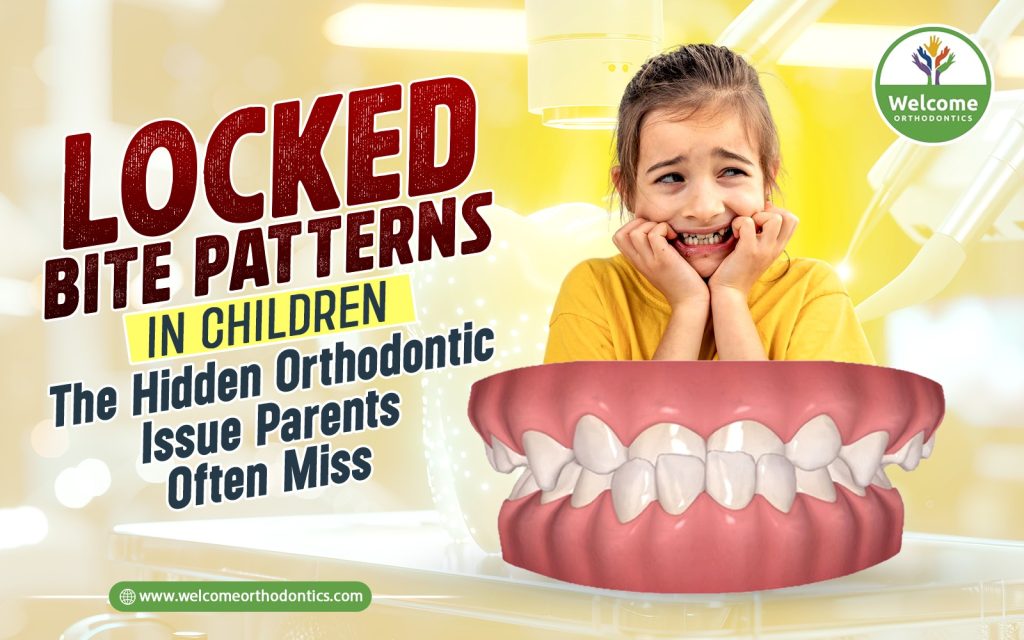
As children grow, their teeth and jaws go through a series of coordinated changes that shape how their bite develops. Most parents expect to see crooked teeth or crowding as signs of orthodontic concerns, but not all problems are that obvious. Some issues develop quietly and affect how the jaws function rather than how the teeth look.
One such condition is a locked bite pattern. A locked bite occurs when the upper and lower teeth do not move freely into a natural, balanced position. Instead, the bite becomes “stuck” in a position that restricts normal jaw movement. This may happen on one side or both sides and often develops gradually during childhood. What makes locked bite patterns particularly concerning is that they can go unnoticed for years. Children often adapt by chewing differently, shifting their jaw, or avoiding certain movements, all without clearly expressing discomfort.
Over time, however, this restriction can influence jaw growth, tooth alignment, muscle balance, and even facial symmetry. Understanding what a locked bite is, why it develops, and how to identify early signs can help parents take proactive steps toward protecting their child’s long-term oral health.
Understanding What a Locked Bite Pattern Is
A locked bite pattern refers to a situation where the teeth restrict normal jaw movement, preventing the jaw from closing or moving in its ideal position.
What “locked bite” means
- The teeth fit together in a way that limits movement
- The jaw may shift to one side to find a comfortable position
- Certain teeth may block others from aligning properly
- The bite does not allow smooth opening and closing
How it differs from a normal bite
In a healthy bite:
- Upper teeth sit slightly outside the lower teeth
- The jaw moves freely during chewing and speaking
- Bite forces are evenly distributed
In a locked bite:
- Teeth may interfere with each other
- The jaw may be forced into an unnatural position
- Movement becomes restricted or uneven
Why it often goes unnoticed
- It usually affects back teeth, not visible in a smile
- Children rarely complain of pain early on
- Adaptation masks the problem (chewing on one side, shifting jaw)
- It develops gradually rather than suddenly
Because of these factors, locked bite patterns are often detected only during orthodontic evaluation.
Common Causes of Locked Bite Patterns in Growing Kids
Locked bite patterns rarely have a single cause. Instead, they develop due to a combination of structural and functional factors.
Jaw Growth Imbalances
- The upper and lower jaws grow at different rates
- One jaw may be narrower or positioned differently
- This mismatch can cause teeth to interfere during biting
- Over time, the jaw adapts to an incorrect position
Narrow Dental Arches
- A narrow upper jaw may not align properly with the lower jaw
- Teeth may sit too far inside or outside their normal position
- This can create a “locking” effect during biting
Tooth Eruption Issues
- Teeth erupting at incorrect angles can block proper alignment
- Delayed or uneven eruption can disrupt bite coordination
- Crowded teeth may prevent smooth jaw movement
Oral Habits and Muscle Patterns
- Thumb sucking or tongue thrusting can alter bite development
- Chewing primarily on one side reinforces imbalance
- Muscle patterns adapt to the incorrect bite over time
Genetic and Structural Factors
- Jaw shape and tooth size are often inherited
- Some children are naturally predisposed to bite discrepancies
- Structural variations may increase the risk of locked bite patterns
Understanding these causes helps explain why early monitoring is essential, many of these factors develop gradually and can influence growth over time.
How Locked Bite Patterns Affect Oral Health and Development
A locked bite is not just a positioning issue, it can influence multiple aspects of a child’s oral health, function, and overall development. Because the teeth and jaws are closely connected to muscle activity and facial growth, even small restrictions in movement can have wider effects over time.
Impact on Chewing
When a child has a locked bite, chewing often becomes less efficient and less balanced. Instead of using both sides of the mouth equally, the child may begin favoring one side without even realizing it. This happens because one side feels more comfortable or allows smoother movement. Over time, this habit can become automatic, leading to uneven chewing patterns. Children may also start avoiding foods that require more effort to chew, such as crunchy or tougher textures, which can further limit proper jaw stimulation and development.
Jaw Movement Restrictions
A healthy jaw should move freely in multiple directions—opening, closing, and shifting slightly side to side during chewing. In a locked bite, this natural movement becomes restricted. The jaw may not open or close smoothly, and the child might unconsciously adjust their jaw position to avoid interference from certain teeth. Side-to-side movement may feel limited or unnatural, and in some cases, subtle clicking or shifting may occur during chewing. These restrictions can place extra strain on the jaw joints over time.
Tooth Wear and Alignment
Because the bite is not evenly distributed, certain teeth may experience more pressure than others. This uneven force can lead to abnormal wear patterns, where some teeth wear down faster than they should. As the child continues to grow, these imbalances can also influence how teeth shift within the dental arches. Teeth may gradually move out of their ideal positions, contributing to crowding, spacing issues, or worsening bite discrepancies.
Muscle Imbalance
The muscles that control jaw movement work best when both sides are used equally. In a locked bite, however, one side of the jaw often becomes more active than the other. The stronger side may become overdeveloped, while the less-used side may weaken due to lack of activity. This imbalance can affect how the jaw moves and functions, making the bite less stable over time. It may also contribute to fatigue or discomfort during extended chewing.
Facial Growth and Symmetry
During childhood and adolescence, the jaws play a major role in shaping facial structure. When bite forces are uneven, they can influence how the jaws grow and develop. Over time, this may lead to subtle facial asymmetry, where one side of the face develops slightly differently than the other. These changes are often not obvious in early childhood but can become more noticeable as growth continues, particularly during the teenage years.
Long-Term Risks
If a locked bite pattern is not addressed, the effects can extend into adolescence and adulthood. Ongoing imbalance may lead to chronic jaw strain, making everyday functions like chewing or speaking less comfortable. Orthodontic treatment may also become more complex, as the bite and jaw position may require more extensive correction. In addition, persistent alignment issues can affect both function and aesthetics, making early identification and intervention especially important.
Early Signs Parents Should Watch For
Locked bite patterns are often subtle, but certain signs can indicate a developing issue. Paying attention to small changes in your child’s daily habits can help you catch concerns early.
Chewing on One Side
Children with a developing locked bite often show a consistent preference for chewing on one side of the mouth. This usually happens because one side feels more comfortable or allows smoother movement. Over time, they may begin avoiding the opposite side altogether, even without realizing it. This pattern can indicate underlying imbalance or interference in the bite.
Jaw Shifting
You may notice that your child’s jaw does not close in a straight, natural path. Instead, it may shift slightly to one side as they bite down. This movement is often an unconscious adjustment to avoid contact between certain teeth. If it continues, the shift can become habitual and affect how the jaw develops over time.
Difficulty Chewing Certain Foods
Children may begin avoiding foods that require more effort to chew, such as crunchy, sticky, or tougher textures. They might complain that chewing feels tiring or uncomfortable, or they may take noticeably longer to finish meals. These changes can indicate that the bite is not functioning efficiently.
Uneven Tooth Contact
In a balanced bite, all teeth should come together evenly. With a locked bite pattern, some teeth may touch while others do not make contact at all. This uneven distribution of pressure can sometimes be identified during dental checkups, even if it’s not obvious at home.
Speech or Comfort Changes
Although less common, some children may show subtle changes in speech due to altered tongue or jaw positioning. Others may occasionally mention jaw stiffness or mild discomfort, especially after eating. Because children often struggle to describe these sensations clearly, these signs can easily be overlooked.
Visible Bite Irregularities
In some cases, there may be visual clues. Parents might notice a crossbite, where teeth sit inside or outside their normal position, or a narrow-looking upper arch. Teeth may also appear slightly misaligned or “out of sync” when the child closes their mouth, especially in the back.
If multiple signs are present or persist over time, orthodontic evaluation is recommended.
How Welcome Orthodontics Helps Detect and Manage Hidden Bite Problems Early
Early orthodontic evaluation gives parents something invaluable, clarity. Instead of waiting for visible problems, it helps identify how a child’s jaws, teeth, and bite are developing beneath the surface. At Welcome Orthodontics, the focus is on assessing jaw growth, bite function, tooth eruption, and available space, so even subtle issues like locked bite patterns can be detected early.
What makes their approach effective is timing and restraint. Not every child needs immediate treatment. In many cases, growth is simply monitored, and intervention is recommended only when it truly makes a difference. When treatment is needed, it is planned to work with natural development, often using conservative approaches such as Braces without extraction of permanent teeth or solutions like Teeth braces in California or Orthodontics braces in California.
Welcome Orthodontics stands out for its combination of advanced technology and experienced care. Digital scans and precise diagnostics allow for accurate evaluation, while Dr. Tavakoli’s 30+ years of experience ensure that decisions are thoughtful and well-timed. Parents are guided through every step with clear explanations, without pressure, so they can make informed decisions.
Families also appreciate the practical side of care. With flexible financing and support for insurance, the practice makes treatment accessible for those searching for Affordable orthodontics near me. Most importantly, every plan is personalized, ensuring that each child receives the right care at the right time for healthy, long-term results.
Conclusion
Locked bite patterns in children are often overlooked because they develop quietly and may not cause immediate discomfort. However, their impact on jaw growth, tooth alignment, and overall function can become significant over time if left unaddressed. By recognizing early signs—such as uneven chewing, jaw shifting, or restricted movement, parents can take proactive steps toward timely evaluation.
Orthodontic monitoring plays a crucial role in identifying these hidden issues during the most important stages of growth. When detected early, many concerns can be guided or corrected in a way that is simpler, more comfortable, and less invasive than treatment later in life. This not only supports better alignment but also helps ensure proper jaw function and balanced facial development.
With expert care from practices like Welcome Orthodontics, families gain both reassurance and direction. Instead of uncertainty, they receive clear insights and a thoughtful plan tailored to their child’s needs. Early attention doesn’t just prevent future complications, it lays the foundation for healthier growth, improved function, and confident smiles that last well into adulthood.
0 comments on “Locked Bite Patterns in Children: The Hidden Orthodontic Issue Parents Often Miss”