

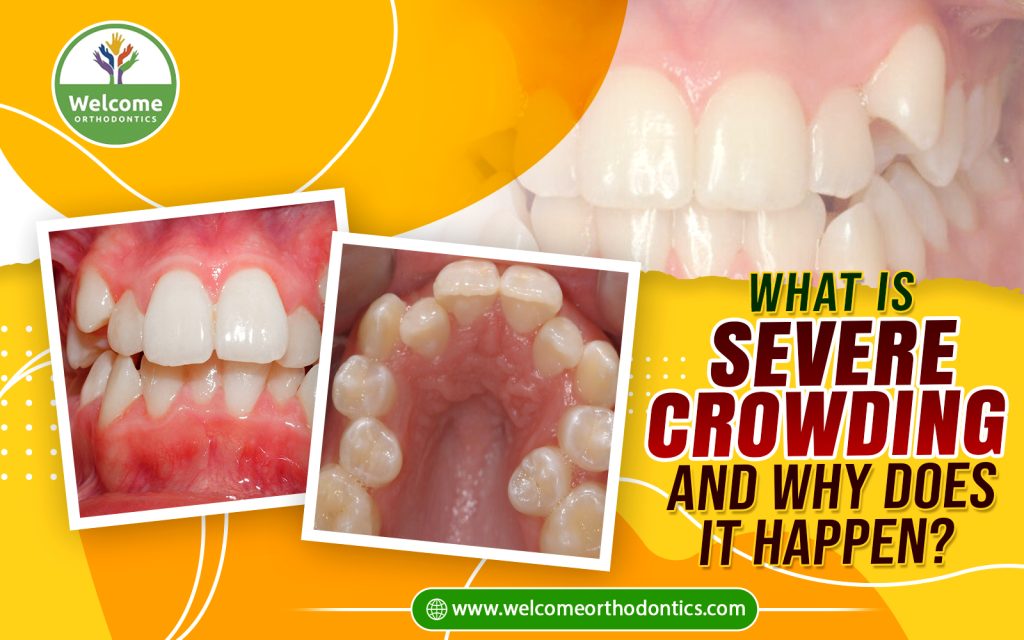
Many parents expect a few crooked teeth when their child’s permanent teeth begin to emerge. During the transition from baby teeth to adult teeth, it’s normal for a smile to look a little uneven. However, there is a significant difference between minor alignment changes and severe crowding. Severe crowding occurs when there simply isn’t enough room in the jaws for all the teeth to fit properly. As a result, teeth may overlap, rotate, erupt out of position, or become trapped beneath the gums. In some cases, crowding becomes obvious early in childhood. In others, it develops gradually as more permanent teeth erupt.
While many people think of crowding as a cosmetic issue, it can affect much more than appearance. Severe crowding can make brushing and flossing difficult, increase the risk of cavities and gum problems, affect bite function, and sometimes lead to more complex orthodontic issues later.
The good news is that crowding often develops gradually, giving orthodontists an opportunity to identify concerns early and guide development before problems become more severe. Understanding why severe crowding happens and what parents should watch for can help families make informed decisions about their child’s oral health.
Understanding Severe Crowding: What It Really Means
Crowding is one of the most common orthodontic conditions, but not all crowding is the same. Orthodontists typically classify crowding based on the amount of space shortage within the dental arches.
What Orthodontists Mean by Severe Crowding
Severe crowding occurs when there is a significant mismatch between the amount of space available in the jaws and the amount of space needed for the teeth. Instead of lining up naturally, teeth are forced to compete for limited room. This often causes teeth to erupt in abnormal positions or become displaced entirely. Unlike mild crowding, which may involve small overlaps, severe crowding often affects multiple teeth and may continue worsening as additional permanent teeth erupt.
How Severe Crowding Differs from Mild or Moderate Crowding
Mild crowding might involve:
- Slight overlapping of front teeth
- Minor rotations
- Small spacing discrepancies
Moderate crowding often includes:
- Noticeable overlap
- Limited space for erupting teeth
- More visible alignment issues
Severe crowding typically involves:
- Significant overlapping
- Teeth erupting outside the dental arch
- Impacted teeth
- Lack of room for incoming permanent teeth
- Bite complications
The difference isn’t simply how crooked the teeth appear. Severe crowding often reflects a more substantial space problem within the jaws.
What Severe Crowding Looks Like
Parents may notice:
- Front teeth overlapping dramatically
- Teeth erupting behind other teeth
- Teeth appearing twisted or rotated
- Permanent teeth emerging while baby teeth remain in place
- Teeth erupting toward the tongue or cheeks
Sometimes the problem develops so gradually that parents don’t realize how little space is available until several permanent teeth have erupted.
Why Severe Crowding Is More Than a Cosmetic Concern
Crooked teeth can affect confidence, but the consequences often extend beyond appearance.
Severe crowding may:
- Increase plaque buildup
- Make oral hygiene difficult
- Affect chewing efficiency
- Contribute to uneven tooth wear
- Complicate future dental treatment
- Cause gum recession and bone loss
This is why orthodontists focus on both function and aesthetics when evaluating crowding.
Why Severe Crowding Happens: Common Causes
Severe crowding rarely develops because of a single factor. In most cases, several developmental influences contribute to the problem.
Jaw Size Versus Tooth Size Discrepancies
The most common cause of severe crowding is a mismatch between tooth size and jaw size.
Some children inherit:
- Larger teeth
- Smaller jaws
- A combination of both
When large teeth attempt to fit into a smaller dental arch, space becomes limited quickly. Even a few millimeters of missing space can significantly affect eruption patterns.
Genetics and Family History
Crowding often runs in families. Parents who experienced:
- Crowded teeth
- Orthodontic treatment
- Impacted teeth
- Small jaw development
may notice similar patterns in their children.
While genetics do not guarantee severe crowding, they often influence jaw shape, tooth size, and growth patterns.
Early Loss of Baby Teeth
Baby teeth serve an important purpose beyond chewing. They help:
- Maintain space
- Guide permanent teeth
- Support proper eruption patterns
When baby teeth are lost too early due to decay or injury, neighboring teeth may drift into the empty space. This can reduce the room available for permanent teeth.
Delayed Loss of Baby Teeth
The opposite problem can also occur. When baby teeth remain in place longer than expected, they may block or redirect erupting permanent teeth.
This can lead to:
- Teeth erupting behind baby teeth
- Rotation
- Misalignment
- Additional crowding
Impacted or Ectopically Erupting Teeth
Some teeth do not follow their normal eruption path. Instead, they may:
- Become trapped beneath the gums
- Erupt at unusual angles
- Push neighboring teeth out of position
This often creates significant crowding problems, especially when canines are involved.
How Jaw Development Influences Available Space
Modern orthodontics increasingly recognizes the role jaw development plays in creating adequate space for teeth.
When the jaws develop properly:
- Dental arches tend to be wider
- Teeth have more room to erupt
- Alignment often occurs more naturally
When jaw growth is restricted:
- Arches may remain narrow
- Space becomes limited
- Crowding becomes more likely
This is one reason early growth monitoring can be so valuable.
Problems Severe Crowding Can Create Over Time
Many parents initially view crowding as an aesthetic concern. However, untreated severe crowding can create several long-term challenges.
Difficulty Cleaning Between Teeth
Overlapping teeth create areas that are difficult to reach with:
- Toothbrushes
- Dental floss
- Routine oral hygiene tools
Plaque and food particles can accumulate in these spaces more easily.
Increased Risk of Cavities and Gum Inflammation
When cleaning becomes more difficult, the risk of dental problems increases. Crowded teeth may contribute to:
- Cavities
- Gingivitis
- Gum irritation
- Tartar buildup
Even children with good brushing habits may struggle to keep severely crowded areas clean.
Bite Problems and Uneven Tooth Wear
Teeth are designed to distribute biting forces evenly. When crowding affects alignment:
- Certain teeth may absorb excessive pressure
- Uneven wear can occur
- Bite relationships may become imbalanced
Over time, these issues may affect comfort and function.
Effects on Chewing and Oral Function
Severe crowding can sometimes interfere with:
- Efficient chewing
- Proper food breakdown
- Tongue movement
- Oral muscle coordination
Children often adapt without realizing anything feels unusual.
Impact on Confidence and Self-Esteem
The social impact of severe crowding should not be overlooked. Children and teenagers may:
- Hide their smiles
- Feel self-conscious
- Avoid photographs
- Become more aware of their appearance
While confidence is only one part of the equation, it remains an important consideration.
Early Warning Signs Parents Should Watch For
Crowding rarely appears overnight. Most cases develop gradually and provide several early warning signs.
Overlapping Front Teeth
One of the earliest indicators is visible overlap of the front teeth. If newly erupting teeth immediately appear crowded, it may suggest limited space within the dental arch.
Permanent Teeth Erupting Behind Baby Teeth
Sometimes permanent teeth emerge before baby teeth have fallen out.
Parents often refer to this as:
“Shark teeth.”
This situation can indicate eruption and spacing concerns.
Teeth Rotating or Erupting Out of Position
When there isn’t enough room in the dental arch, permanent teeth often take whatever space they can find. Instead of erupting in a straight, natural position, they may emerge twisted, angled, or noticeably out of line with neighboring teeth. Parents might notice a tooth turning sideways, erupting behind another tooth, or appearing higher or lower than expected. These changes are often early indicators that the jaw does not have sufficient space to accommodate all incoming permanent teeth.
Lack of Space for Incoming Teeth
Parents may notice obvious crowding before all permanent teeth erupt. Warning signs include:
- No visible gaps
- Teeth tightly packed together
- Incoming teeth lacking room
Narrow Dental Arches
A narrow upper arch or lower arch may indicate limited space availability. These children often develop:
- Crowded smiles
- Rotated teeth
- More complex eruption patterns
Why Early Signs Should Not Be Ignored
Early detection allows orthodontists to:
- Monitor development
- Evaluate growth
- Anticipate future crowding
- Plan treatment at the most effective time
Waiting until all crowding becomes severe may limit some treatment options.
How Orthodontic Evaluation and Early Treatment Can Help
One of the biggest misconceptions about crowding is that treatment should wait until every permanent tooth has erupted. In reality, orthodontic evaluation often begins much earlier.
Why Timing Matters
Children experience significant jaw growth during childhood and adolescence. Evaluating development early allows orthodontists to determine:
- Whether adequate space exists
- How teeth are erupting
- Whether growth is occurring as expected
This information helps guide future treatment decisions.
How Orthodontists Evaluate Space and Growth
A comprehensive evaluation may include:
- Clinical examination
- Digital scans
- X-rays
- Bite analysis
- Growth assessment
These tools help determine whether crowding is likely to worsen over time.
Monitoring Versus Active Treatment
Not every child with crowding requires immediate treatment. Sometimes the best approach is:
- Observation
- Growth monitoring
- Periodic evaluation
In other situations, early intervention may help prevent more serious complications.
Growth-Guided Orthodontic Approaches
When treatment is needed, orthodontists may use growth-focused strategies to support healthy development. Depending on the case, treatment goals may include:
- Creating additional space
- Guiding eruption patterns
- Improving arch development
- Reducing future treatment complexity
By working with natural growth, orthodontists can often address developing concerns before they become more severe.
Why Families Choose Welcome Orthodontics for Severe Crowding Treatment
When parents learn their child has severe crowding, one of the biggest concerns is knowing whether treatment is truly necessary and what options are available. Choosing an orthodontic provider who prioritizes education, transparency, and individualized care can make the process far less overwhelming.
At Welcome Orthodontics, treatment recommendations are guided by a conservative philosophy. The goal is not to begin treatment as early as possible, but to recommend care when it will provide the greatest benefit. If monitoring is the best option, families are told exactly that. If intervention is needed, the team explains why and how it supports the child’s long-term development.
Every child receives a personalized evaluation that considers growth patterns, available space, eruption timing, bite relationships, and overall orthodontic needs. Rather than applying a one-size-fits-all approach, treatment plans are tailored to the unique characteristics of each patient. Families also benefit from advanced orthodontic technology used for imaging, digital scans, and treatment planning. This helps improve diagnostic accuracy while making appointments more comfortable and efficient.
With over 30 years of clinical experience, Dr. Tavakoli has helped countless children and families navigate crowding, bite concerns, and developmental orthodontic issues. His experience allows him to identify potential problems early and provide guidance that balances function, aesthetics, and long-term stability. Parents often appreciate the clear communication provided throughout the process. Recommendations are explained thoroughly, questions are encouraged, and families leave with a better understanding of their child’s development and treatment options.
Affordability is another important part of the Welcome Orthodontics approach. Flexible financing options and assistance with maximizing insurance benefits help make treatment more accessible for families. Because orthodontic care is an investment, the team works to ensure families understand both the clinical and financial aspects of their treatment plan. Most importantly, Welcome Orthodontics focuses on creating a comfortable and supportive environment where children feel at ease and parents feel confident about the care their child is receiving.
Conclusion
Severe crowding is one of the most common orthodontic problems, but it is rarely caused by a single factor. Genetics, jaw development, tooth size, eruption patterns, and growth all play important roles in determining whether enough space exists for permanent teeth.
While crowding often begins as a spacing issue, it can affect oral hygiene, bite function, tooth wear, and overall dental health if left unaddressed. The good news is that many signs appear early, giving parents and orthodontists an opportunity to monitor development and intervene when appropriate.
By understanding what severe crowding is, why it happens, and what warning signs to watch for, families can make informed decisions about their child’s oral health. Early evaluation doesn’t always mean immediate treatment, but it does provide valuable information about how a child’s smile is developing. With thoughtful planning, growth-focused care, and expert guidance from providers like Welcome Orthodontics, children with severe crowding can receive the support they need to develop healthier, more functional, and more confident smiles.
0 comments on “What Is Severe Crowding and Why Does It Happen?”