

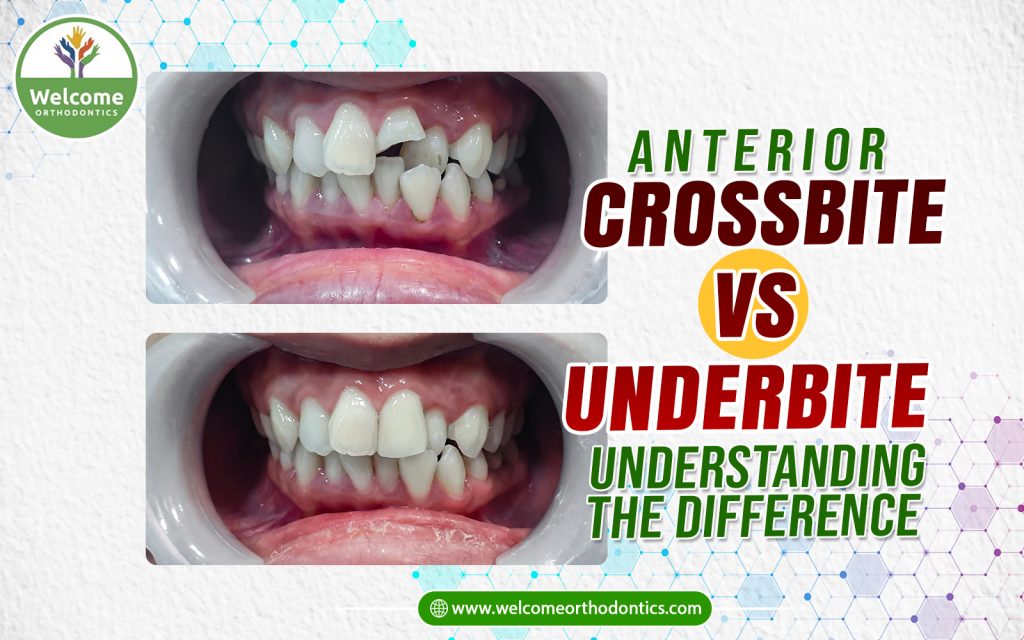
Parents often notice that their child’s front teeth do not seem to fit together correctly but may struggle to identify exactly what is wrong. Terms like anterior crossbite and underbite are frequently used interchangeably, which can create confusion. While these conditions may appear similar at first glance because both involve the front teeth biting incorrectly, they are not the same orthodontic problem.
Many parents first become concerned when they notice an upper tooth sitting behind a lower tooth or when the lower jaw appears to stick out farther than expected. Because both conditions can affect the appearance of a child’s smile and bite, it is easy to assume they are simply different names for the same issue. However, an anterior crossbite and an underbite have different causes, affect oral development in different ways, and often require different treatment strategies.
Understanding the difference between an anterior crossbite and an underbite is important because each condition develops differently, affects oral health in unique ways, and may require different treatment approaches. In some cases, what appears to be a simple tooth-position problem may actually involve jaw growth and development. Accurate diagnosis is often the first step toward determining the most effective treatment plan and ensuring healthy long-term bite function.
What Is an Anterior Crossbite?
An anterior crossbite occurs when one or more upper front teeth bite behind the lower front teeth rather than slightly in front of them.
Under normal circumstances, the upper front teeth overlap the lower front teeth by a small amount. This arrangement helps distribute biting forces properly and supports healthy jaw function. With an anterior crossbite, the issue is typically limited to the position of certain teeth rather than the relationship between the upper and lower jaws.
How an Anterior Crossbite Affects Tooth Position
An anterior crossbite can involve:
- A single upper front tooth
- Multiple upper front teeth
- Permanent teeth erupting in an abnormal position
In many cases, the affected teeth simply erupt on the wrong side of the bite, causing them to sit behind the lower teeth.
Single-Tooth vs Multiple-Tooth Anterior Crossbites
Some children develop a crossbite involving only one tooth, while others experience multiple teeth affected by the condition.
A single-tooth crossbite often results from eruption issues or space limitations. Multiple-tooth crossbites may indicate broader developmental concerns that require closer monitoring.
Common Signs Parents Notice
Parents may observe:
- One upper front tooth sitting behind the lower teeth
- An uneven bite when the child closes their mouth
- Difficulty biting into foods
- Teeth that appear “locked” together
These signs often become more noticeable as permanent teeth begin erupting.
What Is an Underbite?
An underbite is a different type of orthodontic condition that primarily involves jaw relationships rather than individual tooth positions. With an underbite, the lower jaw extends forward relative to the upper jaw, causing the lower front teeth to sit in front of the upper front teeth.
Understanding Skeletal Jaw Relationships
Unlike an anterior crossbite, which is often dental in nature, an underbite frequently has a skeletal component.
The condition may develop because:
- The lower jaw grows excessively
- The upper jaw develops insufficiently
- A combination of both factors occurs
This creates a mismatch between the jaws that affects the entire bite.
How an Underbite Changes Facial Profile
Because underbites involve jaw positioning, they can influence facial appearance.
Patients with more pronounced underbites may exhibit:
- A prominent lower jaw
- A flatter midface
- Altered facial balance
- A more concave profile
These changes are typically not associated with isolated anterior crossbites.
Signs of an Underbite in Children and Adults
Common signs include:
- Lower teeth positioned ahead of upper teeth
- Difficulty biting certain foods
- Facial profile changes
- Speech concerns
- Jaw discomfort in some cases
The severity of symptoms often depends on the degree of jaw discrepancy.
Anterior Crossbite vs Underbite: The Key Differences
Although both conditions affect the front teeth, the underlying causes and characteristics differ significantly.
Teeth Position vs Jaw Position
The most important distinction is what causes the bite discrepancy. An anterior crossbite typically involves teeth that have erupted in the wrong position. An underbite usually involves the position of the jaws themselves.
Dental Problem vs Skeletal Problem
Anterior crossbites are frequently considered dental problems because they primarily affect tooth alignment. Underbites are often skeletal problems because they involve the growth and positioning of the upper and lower jaws.
Appearance Differences
Anterior crossbites may affect only one or several teeth while leaving the overall facial profile unchanged. Underbites are more likely to influence facial appearance because jaw positioning affects the structure of the face.
Functional Differences
An anterior crossbite primarily affects the teeth involved in the bite discrepancy. An underbite often affects the entire bite system, including chewing efficiency, jaw function, and overall occlusion.
What Causes an Anterior Crossbite?
Several factors can contribute to the development of an anterior crossbite.
Abnormal Tooth Eruption
Permanent teeth occasionally erupt in incorrect positions. When this occurs, the affected tooth may emerge behind the lower teeth.
Crowding and Space Limitations
Insufficient room within the dental arch can force teeth to erupt out of alignment. Crowding is one of the most common contributors to anterior crossbites involving permanent teeth.
Delayed Loss of Baby Teeth
Retained baby teeth may interfere with the eruption path of permanent teeth, increasing the likelihood of a crossbite.
Dental Development Factors
Variations in tooth size, eruption timing, and arch development can also influence whether a crossbite develops.
What Causes an Underbite?
Underbites generally arise from factors that influence jaw growth and development.
Genetics and Inherited Jaw Structure
Genetics plays a major role in many underbite cases. Children may inherit jaw growth patterns that predispose them to skeletal discrepancies.
Differences in Upper and Lower Jaw Growth
When one jaw grows disproportionately relative to the other, an underbite may develop. This imbalance often becomes more noticeable during periods of active growth.
Developmental Influences
Growth patterns vary significantly from one child to another. Certain developmental variations may increase the likelihood of underbite formation.
Airway and Growth Considerations
Modern orthodontics recognizes that growth, facial development, and airway function are closely connected.
Some patients with jaw discrepancies may benefit from evaluations that consider broader developmental factors, including those commonly assessed in airway orthodontics.
Can a Child Have Both an Anterior Crossbite and an Underbite?
Yes.
In some cases, a child may have an underbite that also presents with one or more anterior crossbites. This overlap often creates confusion for parents attempting to identify the problem on their own.
Why Self-Diagnosis Can Be Misleading
Looking only at the front teeth may not reveal whether the issue is dental, skeletal, or a combination of both. Two children may appear to have similar bites while requiring completely different treatment approaches.
How Orthodontists Distinguish Between the Two
Orthodontists evaluate:
- Tooth positions
- Jaw relationships
- Facial development
- Bite function
- Growth patterns
These assessments help determine the true source of the problem.
The Importance of Growth Evaluation
Growth evaluation is particularly important in children because jaw relationships can continue changing throughout development. Understanding how growth is progressing helps guide treatment recommendations and timing.
Problems Associated With Untreated Anterior Crossbites
When left untreated, anterior crossbites can create several complications.
Excessive Tooth Wear
Abnormal tooth contact may cause accelerated enamel wear on the affected teeth.
Gum Recession
Incorrect biting forces can place stress on gum tissues surrounding the involved teeth.
Altered Eruption Patterns
Crossbites may interfere with the normal eruption of neighboring teeth.
Functional Bite Challenges
Patients may experience difficulty biting into foods comfortably and efficiently.
Problems Associated With Untreated Underbites
The consequences of untreated underbites often extend beyond individual teeth.
Jaw Joint Strain
Improper jaw relationships may place additional stress on the temporomandibular joints.
Chewing Difficulties
An underbite can reduce chewing efficiency and affect how food is processed.
Facial Growth Imbalances
Jaw discrepancies may become more pronounced as growth continues.
Long-Term Functional Concerns
Persistent underbites can influence overall bite stability and oral function throughout adulthood.
How Orthodontists Evaluate Crossbites and Underbites
A comprehensive orthodontic evaluation helps determine the nature and severity of the condition.
Clinical Examination
The orthodontist examines the teeth, bite, and facial structures.
Digital Scans
Digital models provide precise measurements of tooth alignment and arch relationships.
X-Rays and Growth Assessment
Diagnostic imaging helps evaluate developing teeth, jaw structure, and growth patterns.
Bite Analysis
Assessing how the teeth function together helps identify the source of the problem.
Treatment Options for Anterior Crossbites
Treatment depends on the age of the patient and the underlying cause.
Early Orthodontic Correction
Many anterior crossbites respond well to treatment during childhood when the bite is still developing.
Limited Braces
Braces may be used to move specific teeth into proper alignment.
Clear Aligners in Select Cases
Certain patients may be candidates for aligner therapy depending on the complexity of the crossbite.
Monitoring During Growth
Some situations require observation before active treatment begins.
Treatment Options for Underbites
Because underbites often involve jaw relationships, treatment may differ significantly.
Growth Modification Approaches
Younger patients may benefit from treatments that help guide jaw development during growth.
Orthodontic Treatment During Adolescence
Braces or other orthodontic appliances may be used to improve alignment and bite relationships.
Adult Treatment Options
Adults with underbites can often benefit from orthodontic treatment, though treatment planning may be more complex.
When Surgical Correction May Be Considered
Severe skeletal discrepancies sometimes require surgical intervention to achieve optimal results.
When Should Parents Schedule an Orthodontic Evaluation?
Parents should consider scheduling an evaluation if they notice:
- Upper teeth biting behind lower teeth
- Lower teeth protruding ahead of upper teeth
- Difficulty biting foods
- Jaw asymmetry
- Concerns about facial growth
Early assessment allows orthodontists to monitor development and determine whether treatment may be beneficial.
How Welcome Orthodontics Helps Patients With Crossbites and Underbites
At Welcome Orthodontics, we understand that no two bite problems are exactly alike. While an anterior crossbite may involve the position of one or several teeth, an underbite often relates to how the upper and lower jaws are developing. Determining the difference is essential because the treatment approach, timing, and long-term goals can vary significantly.
Dr. Mark Tavakoli brings more than 30 years of clinical experience to the evaluation of developing bites. Using advanced digital imaging, orthodontic examinations, and growth assessments, he carefully analyzes whether a patient’s concern is primarily dental, skeletal, or a combination of both. This comprehensive approach allows potential issues to be identified early and helps families understand what to expect as growth continues.
Because many crossbites and underbites develop during childhood, monitoring growth is often just as important as active treatment. Our team closely tracks jaw development, eruption patterns, and bite changes over time to determine the most effective treatment timing. When treatment is needed, recommendations are tailored to the individual patient and may include growth-guidance techniques, braces, clear aligners, or other orthodontic solutions designed to achieve healthy, stable results.
At Welcome Orthodontics, our goal is not simply to straighten teeth but to create properly functioning bites that support long-term oral health, facial balance, and confident smiles.
Conclusion
Although anterior crossbites and underbites may appear similar at first glance, they are fundamentally different conditions. An anterior crossbite typically involves tooth positioning, while an underbite often reflects an underlying jaw relationship issue.
Understanding these distinctions helps parents recognize why professional evaluation is so important. Accurate diagnosis allows orthodontists to identify the source of the problem, evaluate growth patterns, and recommend treatment strategies that support both function and long-term oral health.
With early recognition and appropriate care, patients can achieve healthier bites, improved function, and greater confidence in their smiles.
0 comments on “Anterior Crossbite vs Underbite: Understanding the Difference”