

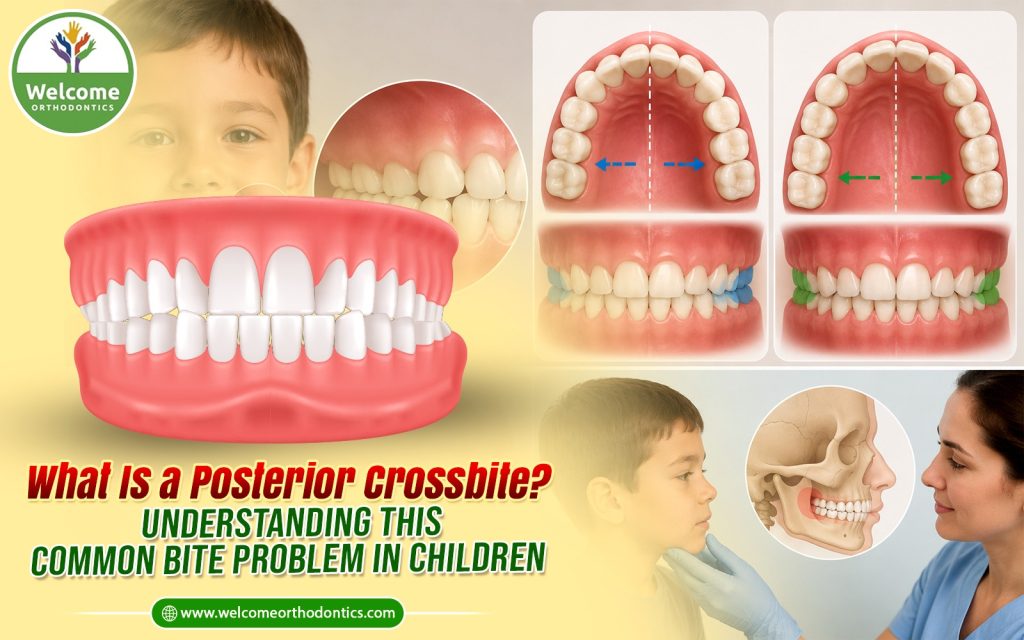
A child’s smile goes through many changes as baby teeth are replaced by permanent teeth. While some differences in tooth alignment are a normal part of growth, certain bite problems should not be ignored. One of the most common is a posterior crossbite, a condition that affects how the upper and lower back teeth fit together.
Unlike crowding or crooked teeth, a posterior crossbite is often less noticeable to parents because it occurs toward the back of the mouth. Many children experience little or no discomfort, making the condition easy to overlook during everyday activities. However, an untreated posterior crossbite can influence jaw growth, chewing patterns, and the way the teeth function together as a child develops.
The encouraging news is that posterior crossbites can often be identified during routine orthodontic evaluations. Detecting the condition early gives orthodontists the opportunity to monitor growth, determine its cause, and recommend treatment when appropriate.
In this article, we’ll explain what a posterior crossbite is, the different types, why it develops, the signs parents should watch for, and why early evaluation plays an important role in protecting your child’s long-term oral health.
What Is a Posterior Crossbite?
A posterior crossbite is a bite condition in which one or more of the upper back teeth bite inside the lower back teeth when the mouth is closed. Under normal circumstances, the upper teeth should sit slightly outside the lower teeth, creating a balanced bite that distributes chewing forces evenly. When a posterior crossbite is present, this relationship is reversed in the affected area.
The condition may involve:
- One upper back tooth
- Several upper back teeth
- One side of the mouth
- Both sides of the mouth
Because the problem affects the bite rather than simply the position of individual teeth, orthodontists evaluate both tooth alignment and jaw development during diagnosis.
How a Healthy Back-Tooth Bite Should Look
In a healthy bite:
- The upper back teeth sit slightly outside the lower back teeth.
- Both sides of the mouth contact evenly during chewing.
- The jaws close comfortably without shifting.
- Biting forces are distributed across multiple teeth.
This balanced relationship helps protect the teeth, jaw joints, and surrounding muscles from unnecessary stress.
What Happens in a Posterior Crossbite?
With a posterior crossbite, one or more upper back teeth bite inside the lower teeth instead of outside them. This altered relationship may cause the lower jaw to shift slightly each time the child closes their mouth in order to achieve a comfortable bite. Although this shift may seem minor initially, repeated movement during growth can gradually influence how the bite develops.
Types of Posterior Crossbites
Not every posterior crossbite is the same. Orthodontists classify the condition according to which teeth are involved and what is causing the bite discrepancy. Understanding these differences helps determine the most appropriate treatment approach.
Unilateral Posterior Crossbite
A unilateral posterior crossbite affects only one side of the mouth. This is the most common type seen in children. Because only one side is affected, children often shift their lower jaw toward that side when biting down. Over time, this functional shift may contribute to uneven jaw development if left unaddressed. Parents rarely notice the shift because it usually occurs automatically whenever the child closes their mouth.
Bilateral Posterior Crossbite
A bilateral posterior crossbite affects both sides of the mouth. Instead of one side being affected, the upper back teeth bite inside the lower teeth on both the right and left sides. Because the bite discrepancy is more symmetrical, children may not demonstrate the same jaw shift seen with unilateral crossbites. However, the altered bite relationship can still affect chewing efficiency and overall bite development.
Dental vs Skeletal Posterior Crossbites
Orthodontists also distinguish posterior crossbites based on whether the problem originates from the teeth or the jaws.
A dental posterior crossbite occurs when the teeth themselves erupt in abnormal positions while jaw size remains relatively normal.
A skeletal posterior crossbite develops because of differences in jaw growth, most commonly when the upper jaw is narrower than the lower jaw.
Determining whether the condition is dental or skeletal is an important part of treatment planning because each requires a different approach.
What Causes a Posterior Crossbite?
Posterior crossbites usually develop because of factors affecting jaw growth, tooth eruption, or oral habits. Several causes may contribute to the condition.
Narrow Upper Jaw
One of the most common causes is a narrow upper jaw. When the upper jaw does not develop wide enough to fit properly over the lower jaw, the upper back teeth may close inside the lower teeth. This type of crossbite often becomes noticeable during childhood as permanent teeth begin erupting.
Genetics and Growth Patterns
Jaw size and facial growth are strongly influenced by genetics. Some children naturally inherit jaw proportions that increase the likelihood of developing a posterior crossbite. In these cases, the condition may occur even when oral hygiene and dental habits are excellent.
Prolonged Thumb Sucking and Pacifier Use
Certain childhood habits may influence the way the jaws and teeth develop. Habits that continue beyond the preschool years can sometimes contribute to narrowing of the upper dental arch.
Examples include:
- Thumb sucking
- Finger sucking
- Extended pacifier use
While not every child who develops these habits will develop a crossbite, prolonged habits may increase the risk.
Mouth Breathing and Airway Development
The way children breathe can also influence facial growth. Persistent mouth breathing may affect tongue posture and upper jaw development. Normally, the tongue rests against the roof of the mouth, where it helps support healthy arch development.
When children primarily breathe through their mouths, this natural support may be reduced, potentially contributing to a narrower upper jaw over time. Because breathing patterns and facial growth are closely connected, orthodontists often evaluate these factors during comprehensive examinations.
Delayed or Abnormal Tooth Eruption
Permanent teeth occasionally erupt in positions that alter the normal bite relationship. Although eruption problems alone are not the most common cause of posterior crossbites, they may contribute in certain cases, particularly when combined with space limitations or jaw discrepancies.
Signs and Symptoms Parents May Notice
Posterior crossbites often develop gradually, and many children do not complain of discomfort. Instead, parents may notice subtle changes in how their child chews or closes their mouth.
Teeth That Don’t Fit Together Properly
One of the earliest signs is that the upper and lower back teeth appear to fit together differently on one or both sides.
Parents may notice:
- Upper teeth sitting inside lower teeth
- An uneven bite
- One side appearing different from the other
These changes are often easier for an orthodontist to recognize during an examination.
Chewing on One Side of the Mouth
Children with unilateral posterior crossbites sometimes prefer chewing on one side. Although this habit may develop unconsciously, it can indicate that one side of the bite feels more comfortable than the other. Persistent one-sided chewing should be evaluated because it may reflect an underlying bite discrepancy.
Jaw Shifting When Biting
Some children move their lower jaw slightly to one side before their teeth come together. This movement, known as a functional shift, helps the child achieve a more comfortable bite despite the crossbite. Parents may occasionally notice the chin moving sideways as the child closes their mouth.
Facial Asymmetry During Growth
Over time, an untreated functional shift may contribute to subtle differences in facial symmetry. These changes usually develop gradually and may be difficult for parents to recognize without professional evaluation. Because children continue growing throughout childhood, orthodontists monitor facial development carefully when posterior crossbites are present.
Speech or Chewing Difficulties
Although many children function normally, some may experience:
- Difficulty chewing certain foods
- Uneven chewing patterns
- Minor speech differences related to bite function
These concerns vary depending on the severity of the crossbite and whether other orthodontic conditions are also present.
How Orthodontists Diagnose a Posterior Crossbite
Diagnosing a posterior crossbite involves more than simply looking at the position of the teeth. Orthodontists evaluate how the teeth function together, whether the jaws are developing normally, and whether the child shifts the jaw while biting. A comprehensive examination helps determine both the severity of the crossbite and its underlying cause.
Clinical Examination
The orthodontist begins by examining the teeth, bite, and facial structures.
During the examination, they evaluate:
- Tooth alignment
- Bite relationships
- Jaw movement
- Facial symmetry
- Signs of abnormal tooth wear
This assessment provides valuable information about how the bite functions during everyday activities.
Bite Analysis
Bite analysis focuses on how the upper and lower teeth come together.
The orthodontist determines:
- Whether the crossbite affects one side or both sides
- If the lower jaw shifts while closing
- Which teeth contact first
- How evenly chewing forces are distributed
Understanding these functional relationships helps guide treatment planning.
Digital X-Rays and Imaging
Digital imaging provides information that cannot be seen during a visual examination.
Depending on the child’s needs, imaging may be used to evaluate:
- Developing permanent teeth
- Jaw relationships
- Bone structure
- Tooth eruption patterns
- Overall dental development
These diagnostic tools help orthodontists determine whether the crossbite is primarily dental or skeletal in nature.
Evaluating Jaw Growth and Facial Development
Children continue growing throughout adolescence, making growth assessment an important part of diagnosis.
Orthodontists evaluate:
- Upper jaw width
- Lower jaw position
- Facial symmetry
- Growth patterns
Understanding how the jaws are developing helps determine the most appropriate timing for treatment.
Can a Posterior Crossbite Correct Itself?
Parents often wonder whether a posterior crossbite will disappear naturally as additional permanent teeth erupt. In most cases, a true posterior crossbite does not correct itself without intervention. If the condition results from a narrow upper jaw or an established bite discrepancy, normal growth alone is unlikely to restore the proper relationship between the upper and lower teeth. However, not every child requires immediate treatment.
Some mild cases may simply require observation while orthodontists monitor:
- Jaw growth
- Tooth eruption
- Bite development
- Functional changes
Regular evaluations help determine whether the condition remains stable or begins affecting overall oral development.
Treatment Options for Posterior Crossbites
Treatment depends on the child’s age, the severity of the crossbite, and whether the condition is caused primarily by tooth position or jaw development.
Monitoring Mild Cases
When the crossbite is mild and growth is progressing normally, periodic observation may be recommended. Monitoring allows orthodontists to evaluate how the bite changes as additional permanent teeth erupt before deciding whether treatment is necessary.
Palatal Expansion
When a posterior crossbite results from a narrow upper jaw, palatal expansion is one of the most common treatment approaches for growing children. Expansion appliances gradually widen the upper jaw, helping improve the relationship between the upper and lower teeth while creating additional space for proper bite development. Because children’s bones are still developing, expansion is often more predictable during growth than later in adulthood.
Braces and Other Orthodontic Appliances
Some posterior crossbites require braces or other orthodontic appliances to reposition teeth and improve bite alignment.
Treatment may focus on:
- Moving individual teeth
- Correcting bite relationships
- Coordinating the upper and lower arches
- Improving overall function
The specific approach depends on each patient’s needs.
Treatment for Teenagers and Adults
Although posterior crossbites are often identified during childhood, treatment remains possible later in life. Teenagers and adults may benefit from orthodontic treatment designed to improve bite function and tooth alignment. Because jaw growth has largely finished, treatment planning may differ from that used for younger children.
How Welcome Orthodontics Helps Children With Posterior Crossbites
At Welcome Orthodontics, every child receives an individualized evaluation designed to understand not only how the teeth fit together but also how the jaws and facial structures are developing. Because posterior crossbites can vary significantly from one patient to another, Dr. Mark Tavakoli carefully evaluates the underlying cause before recommending treatment.
Using advanced digital imaging, comprehensive bite analysis, and more than 30 years of clinical experience, Dr. Tavakoli monitors jaw growth, eruption patterns, and bite function to develop personalized treatment plans for each child. Whether a patient requires simple observation, growth monitoring, or active orthodontic treatment, recommendations are based on achieving healthy long-term function rather than simply correcting tooth alignment.
Our goal is to create balanced bites that support comfortable chewing, healthy jaw development, and confident smiles throughout childhood and beyond.
Conclusion
A posterior crossbite is more than a simple alignment issue involving the back teeth. Because it affects how the upper and lower jaws fit together, the condition can influence chewing patterns, bite function, tooth wear, and facial development as a child grows.
While many children experience few noticeable symptoms, a posterior crossbite rarely corrects itself without professional evaluation. Identifying the condition early allows orthodontists to monitor jaw growth, determine the underlying cause, and recommend treatment when appropriate.
The good news is that modern orthodontic care offers effective solutions for children with posterior crossbites. Whether treatment involves observation, palatal expansion, braces, or other orthodontic approaches, timely evaluation helps support healthier bite development and long-term oral function. By recognizing the signs early and seeking professional guidance, parents can help ensure their child’s smile develops in the healthiest way possible.
0 comments on “What Is a Posterior Crossbite? Understanding This Common Bite Problem in Children”